

Engine knock can send chills down your spine - that metallic rattling or pinging sound means your motor's crying for help. The good news? It's often fixable at home, especially if low oil is the culprit. Adding oil might quiet things down if lubrication is lacking, but it won't touch deeper issues like worn bearings or bad fuel.
In this guide, we'll break down why engine knock happens, how to check and add oil correctly, other common causes, and what to do next. Let's diagnose your ride and get it purring again.
Why Does Your Engine Knock? Common Causes Explained
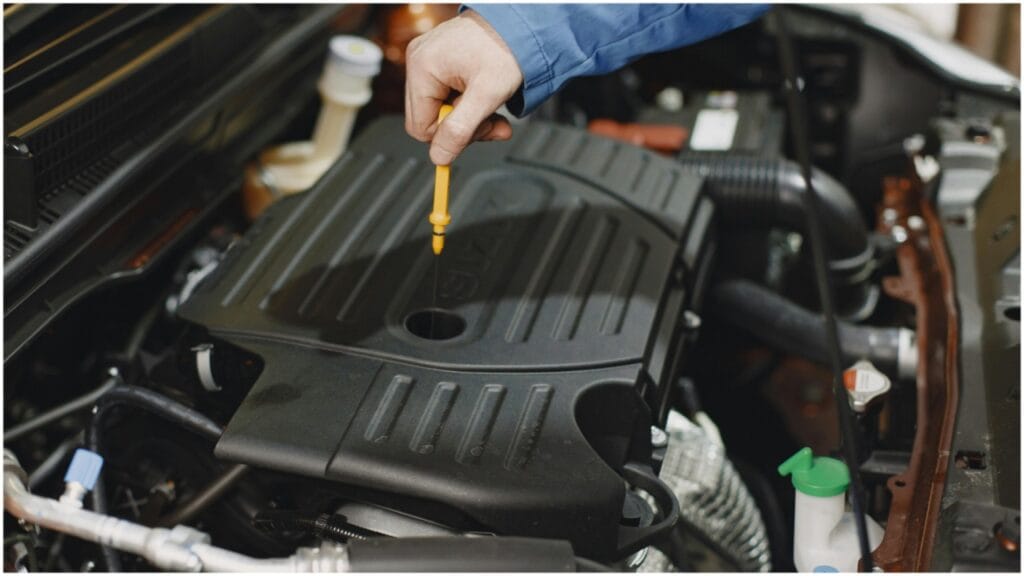
Engine knock (also called detonation or pinging) happens when combustion in the cylinders goes haywire, causing uncontrolled explosions that rattle parts. Low oil is a top offender - without enough lubrication, metal grinds on metal, especially in bearings or rods.
Here's a rundown of the main causes:
- Low or dirty oil: Starves moving parts of lubrication, leading to knocking that worsens under load.
- Carbon buildup: Gunk on pistons or valves disrupts even fuel burn, common in high-mileage engines.
- Worn components: Damaged pistons, rings, bearings, or rods create persistent rod knock (deep, low-rpm rumble).
- Incorrect fuel octane: Low-octane gas causes pre-ignition in high-compression engines.
- Timing or sensor issues: Faulty ignition timing, bad knock sensors, or overheating spark plugs trigger detonation knock (high-rpm ping).
- Overheating or lean fuel mixture: Poor cooling or air-fuel imbalance spikes cylinder temps.
Listen closely: A steady knock at idle often points to mechanical wear; a ping under acceleration screams fuel or timing problems. Ignoring it risks major engine damage - act fast.
Step 1: Check Your Oil Level the Right Way
Never skip this - low oil causes 30% of knocks and is the easiest fix. Do it right to avoid false readings.
- Park on flat ground with the engine off and fully cooled (wait 10-15 minutes after driving).
- Pull the dipstick, wipe it clean, reinsert fully, and pull again.
- Oil should sit between "Low" and "Full" marks. Below low? Add oil ASAP.
- Check color too: Black/sludgy means it's time for a change; milky indicates coolant leak (stop driving!).
Pro tip: Inspect weekly or every 1,000 miles. Tools needed: Just the dipstick and a rag.
Step 2: Adding Oil Correctly (Without Overfilling)
If low, top it up - but precision matters. Overfilling foams the oil, starves the top end, and causes seals to blow.
Follow these steps:
- Grab the right oil: Check your owner's manual for viscosity (e.g., 5W-30 synthetic) and spec (e.g., API SN).
- Warm the engine slightly (idle 2 minutes) for accurate flow, then shut off.
- Use a funnel over the oil filler cap. Add 1/2 quart at a time.
- Wait 2 minutes, recheck dipstick, and repeat until midway between marks.
- Run the engine 1 minute, shut off, wait, and final-check.
Expect to add 1-2 quarts max for most cars. Drive gently 10 miles, then recheck - levels settle.
When Oil Isn't the Fix: Dig Deeper
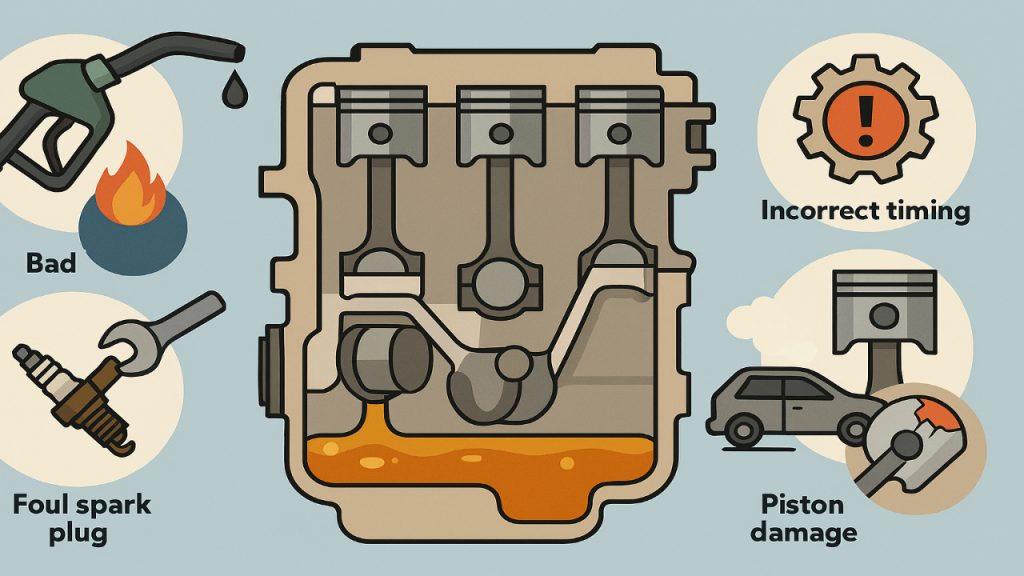
Added oil but knock persists? Don't drive far - here's what else to check:
Quick Home Tests
- Fuel quality: Switch to premium (91+ octane) from a reputable station. Add a fuel system cleaner like Sea Foam.
- Spark plugs/wires: Inspect for fouling; replace if worn.
- Air filter: Clogged ones lean out the mix - swap if dirty.
Red Flags for Mechanics
- Knock louder on acceleration? Likely detonation (fuel/timing).
- Deep rumble at idle? Rod or main bearing failure - tow it.
- Accompanied by smoke/power loss? Possible piston damage.
Budget $100-500 for additives/cleaners; $1,000+ for rebuilds. Scan for codes with an OBD2 tool first.
Could It Be Bad Fuel?
Here’s something I didn’t even think about until it happened to me - bad fuel can mess with your engine and cause a knock. I know it sounds strange, but it’s true! One time, I was getting this annoying knocking sound, and I couldn’t figure out why. Turns out, the gas I filled up with wasn’t great quality.
If you’ve ever gotten gas from a station that might be a little shady or used fuel with the wrong octane level, that could be the culprit. It messes with how your engine burns the fuel, and that’s when you hear the knocking sound. I had to learn this the hard way, but once I switched to better gas, the knock went away.
If you think bad fuel might be the issue, try filling up with higher-quality gas next time. You can also use a fuel cleaner, which I found helpful. If the knock stops after that, then it was the fuel all along.
So, before you jump to conclusions, make sure it’s not the fuel causing the trouble. It was an easy fix for me, and I felt so much better once I figured it out!
Prevention: Keep Knock Away Long-Term
Stay ahead with these habits:
- Change oil every 5,000 miles (synthetic) or per manual.
- Use quality fuel and additives like Lucas Oil Stabilizer for noisy engines.
- Tune-ups yearly: Plugs, filters, PCV valve.
- Monitor temps - overheating accelerates wear.
Conclusion
Alright, so we’ve covered a lot, huh? From adding oil to figuring out what’s causing that annoying engine knock. Here’s what I’ve learned from my own experience: sometimes, adding oil is all it takes to stop the noise. But other times, it’s just the tip of the iceberg.
If the knock doesn’t stop after adding oil, don’t panic! It could be something like worn-out parts, carbon buildup, or even bad fuel. That’s when you might need to take your car to a mechanic for a closer look. But don’t worry - getting to the bottom of it can save you a lot of trouble later.
I always say, listen to your car. It’s trying to tell you something. If you hear a knock, check the oil first. If that doesn’t do the trick, start thinking about what else could be causing the problem. And hey, don’t forget about the fuel - it could be a simple fix that makes all the difference!
Taking care of your car is pretty easy once you get the hang of it. Regular oil checks, using good fuel, and keeping an ear out for weird sounds can keep your engine happy and running smoothly for a long time.
Common FAQ's
Your engine's knocking from dry bearings grinding hard. Stop driving now - add the right oil slowly to the full mark after cooling. It might quiet down fast. Still knocking? Check for damage. Tow if needed.
Single knock when starting car often means loose mounts, worn starter, or a little engine play. The noise comes as everything loads suddenly. Check mounts, starter, exhaust, and suspension joints. Fix early to avoid bigger damage or safety issues.