

Driving on ice is a huge test for any driver. When your tires lose their grip, you lose control of your steering and your brakes. It is a scary feeling, but you can learn how to handle it. This guide shows you how to stay safe, how to get your car ready, and what to do if you start to slide.
The Science of Why Cars Slide
To stay safe, you need to know how tires work. On dry roads, tires use static friction to grab the pavement. This keeps you moving where you want to go. On ice, that grip goes away.
A very thin layer of water usually sits on top of the ice. This water acts just like oil. If you brake too hard, your tires stop spinning and start to glide. This is called kinetic friction. At that point, your car is just a heavy sled, and you cannot steer it at all.
Get Your Car Ready at Home

You can make your car much safer before you even leave your driveway. Being ready is the best way to avoid a crash.
Pick the Best Tires
- Winter vs. All-Season: All-season tires get hard like stiff plastic when it is cold. Winter tires stay soft. Soft rubber grips the ice much better.
- Look for the Snowflake: Check for the Three-Peak Mountain Snowflake (3PMSF) mark on the side of your tire. This proves the tire is safe for deep snow and ice.
Check These Three Things
- Air Pressure: Cold air makes tire pressure drop. For every $10^{\circ}\text{F}$ the temperature goes down, you lose 1 PSI. If your tires are low, the car is harder to drive. Check them every week.
- Better Fluid: Use "winter" wiper fluid so the lines do not freeze up.
- Clean the Roof: Clear all snow off the top of your car. If you don't, it can slide down and block your window while you are driving.
How to Drive on Icy Roads
When you are on the road, you must be very gentle. Think of your car as something that might break if you move too fast.
- Be Very Smooth: Do not stomp on the gas or the brakes. Turn the steering wheel slowly. Quick moves make the car slide.
- Slow Down: The speed signs are for dry roads. On ice, you should go much slower than the sign says.
- Leave a Huge Gap: On dry roads, a 3-second gap is okay. On ice, stay 8 to 10 seconds behind the car in front of you. You need that space to stop slowly.
- The AWD Myth: All-wheel drive helps you move forward, but it does not help you stop. Every car can slide on ice, no matter how many wheels are turning.
Using Your Gears to Stay Safe
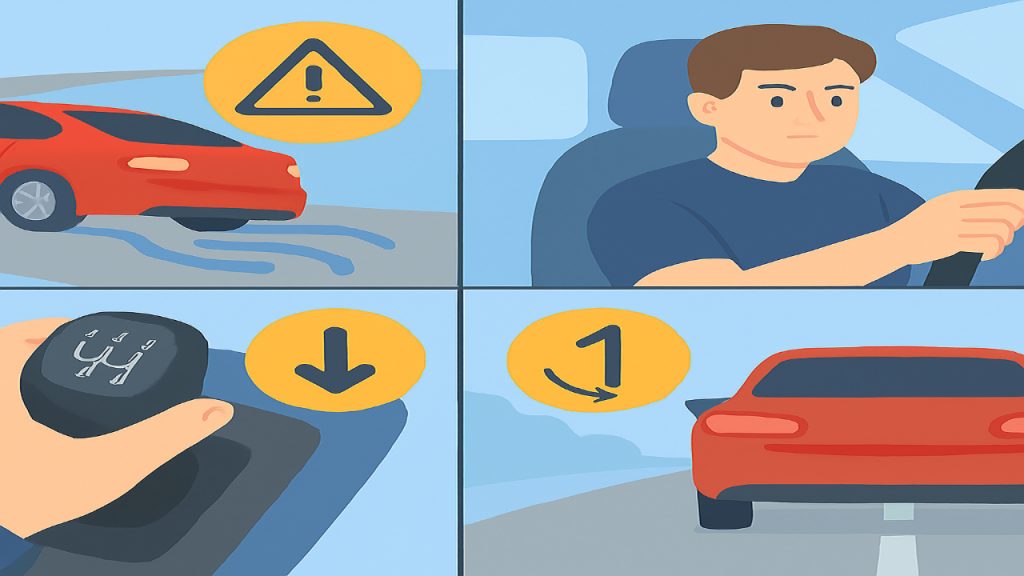
Your brakes are not the only way to slow down. Your engine can help keep you steady.
- Shift Down: If you are going down a hill, put your car in a lower gear (look for 'L' or '2'). This slows the wheels down without using the brakes. It helps keep the tires from locking up.
- Stay in Drive: Never put your car in "Neutral" to stop. You want the engine to stay connected to the wheels so you have more control.
What to Do if You Start to Slide
If you feel the car start to drift, stay calm. Do not slam on the brakes!
If the Front Slides (Understeer)
This is when you turn the wheel, but the car keeps going straight.
- Take your foot off the gas.
- Do not turn the wheel more. 3. Wait for the tires to slow down and find their grip again.
If the Back Slides (Oversteer)
This is when the back of the car swings out to the side.
- Steer into the slide. If the back of the car moves left, turn your wheel to the left.
- Look where you want to go. Keep your eyes on the road, not the trees. Your hands follow your eyes.
- No gas, no brakes. Let the car get straight on its own.
How to Brake
- With ABS: If your car has anti-lock brakes, push the pedal hard and hold it. The pedal will shake and make noise. That means it is working.
- No ABS: If your car is old and has no ABS, you must "pump" the brakes. Push and let go fast, over and over.
Where the Ice Hides
Ice is harder to see in some spots. You have to be a detective.
- Bridges: Bridges freeze first because cold air hits them from the top and the bottom.
- Shadows: Places under trees or tall buildings stay icy much longer because the sun cannot melt them.
- Intersections: Warm engines from stopped cars melt the snow. It then freezes into "glare ice," which is very slick.
- The Spray Test: Look at the tires of the car in front. If the road looks wet but there is no water spraying up, you are driving on black ice.
Winter Buttons and Tech
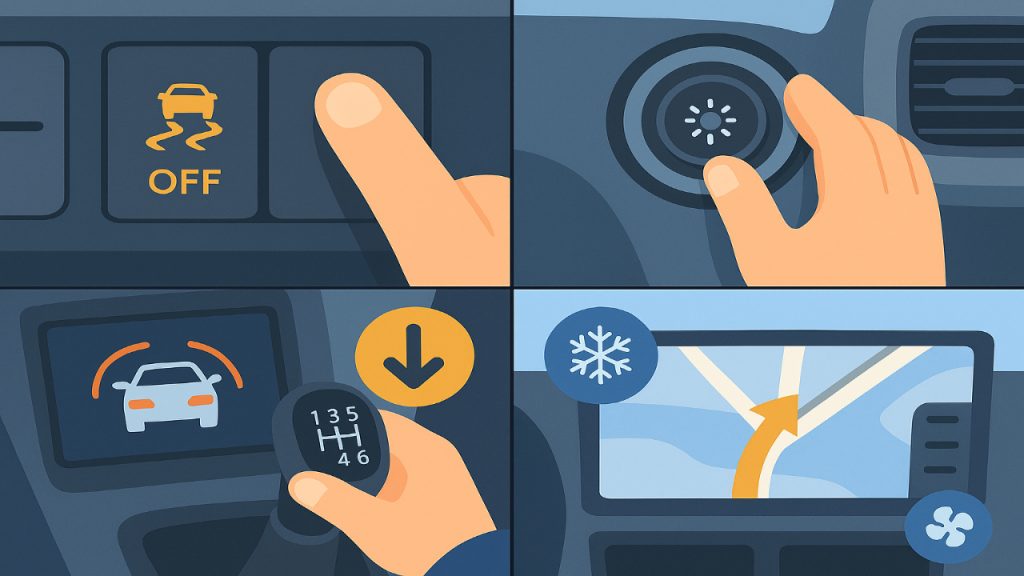
Newer cars have tools to help you. Use them if you have them.
- Snow Mode: This makes the car start in a higher gear so the tires do not spin too fast.
- Traction Control: This system stops a wheel from spinning if it gets slippery.
- No Sport Mode: Never use "Sport" or "Power" modes on ice. They make the car too jumpy.
Handling Hills
Hills are the scariest part of winter driving.
- Going Up: Get a little bit of speed before you start the hill. Do not stop in the middle, or you will slide backward.
- Going Down: Start at the top as slow as you can. Use your lowest gear. Do not wait until you are halfway down to try to slow down.
Know Your Ice Types
- Slush: Melted, watery snow. It can pull your car to the side.
- Black Ice: Clear ice that looks like a wet road. It is very dangerous because you cannot see it.
- Packed Snow: Snow that is squashed down. It is often just as slippery as ice.
If You Get Stuck
If the car stops moving, do not just spin your tires. That makes the ice even slicker.
- Dig it Out: Use a shovel to clear snow from around all four tires.
- Rock the Car: Shift from "Drive" to "Reverse" and back. Do this gently to move the car out of the hole.
- Add Grip: Put sand, kitty litter, or even your floor mats right in front of the tires to help them grab.
Your Winter Safety Kit
Keep these things in your trunk all winter:
- For Grip: A bag of sand or kitty litter.
- For Tools: A shovel and a good ice scraper.
- For Warmth: A thick blanket and extra gloves.
- For Power: A phone charger and a flashlight.
- Stay Safe: If you get stuck and stay in the car, make sure snow is not blocking your tailpipe. Bad air can get inside if the pipe is covered.
Conclusion
Driving on ice is never easy, but you can stay safe by being smart and prepared. Always remember that patience and slow moves are your best tools. If you fix your car before the cold hits and keep a big space between you and other drivers, you can avoid most slides.
If your car does start to slide, the most important rule is to stay calm. Do not hit the brakes hard and do not jerk the wheel. By following the steps in this guide, you can keep control and get home safely. Respect the ice, take your time, and always put safety first.
Common FAQ's
This is a computer that helps stop slides. It is good, but it cannot save you if you are going way too fast.