
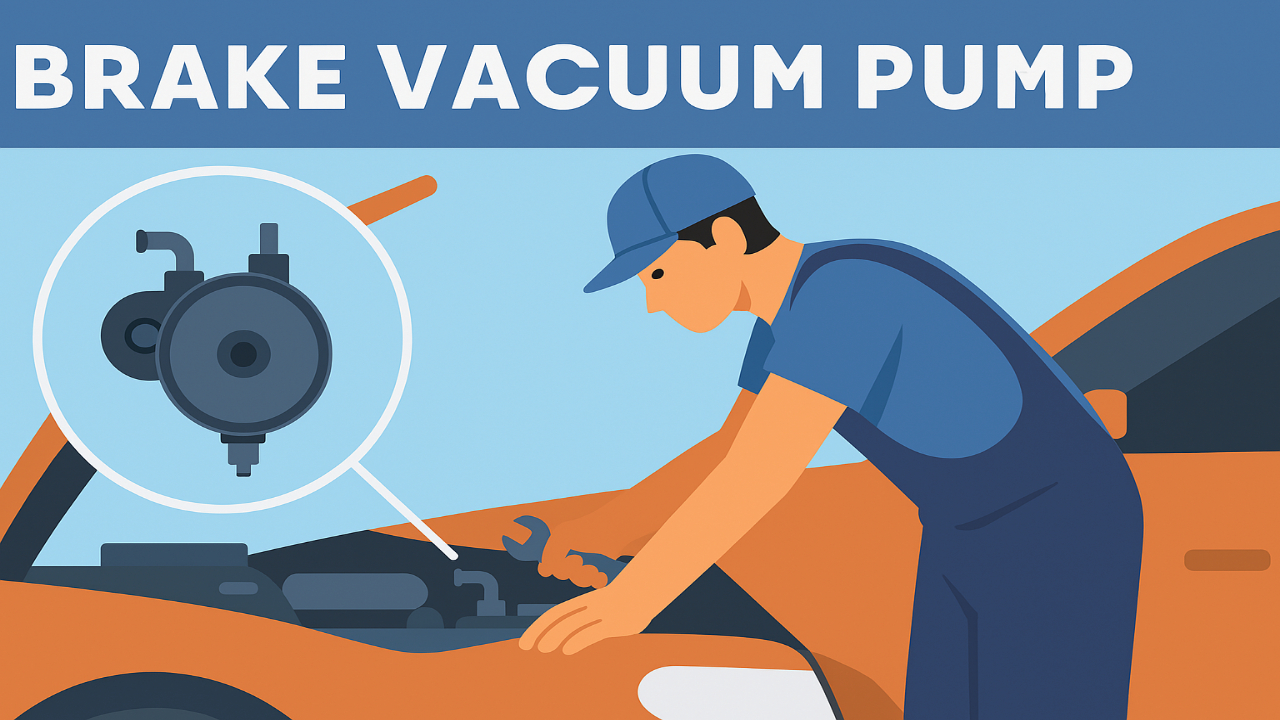
A brake vacuum pump is a super essential part of your car’s brake system. It helps the brake booster by generating a vacuum. This vacuum makes it crucial to push the brake pedal and shut the machine off safely. Multiple cars today use turbocharged, hybrid, or electric engines.
These engines do not forever make enough vacuum on their own. They need a brake vacuum pump to help. These pumps have become preferred, stronger, and work more surely. They help keep you safe anytime you brake.
How Brake Vacuum Pumps Work
Brake vacuum pumps make vacuum. Vacuum is low air pressure. It helps the brake booster. The booster makes your push on the brake pedal stronger. You stop the car with less work.
The Basics of Brake Vacuum and Boosting
- Vacuum Generation: The pump makes vacuum pressure. It is about 16 to 20 inches of mercury. This is key for the brake booster.
- Brake Booster Function: The booster has a diaphragm. It splits into two rooms. One room has vacuum all the time. The other room changes when you push the pedal.
- Force Amplification: The pressure change makes your push 3 to 4 times stronger. You do not need to push hard.
- At-Rest State: No push on pedal means both rooms have vacuum. They are the same.
- Braking Action: Push pedal lets air in one room. This pushes the diaphragm. It helps make brake fluid pressure.
- Release Mechanism: Let go of pedal. A spring pulls back. Vacuum goes back to both rooms.
Traditional vs. Modern Vacuum Sources

- Engine Intake Manifold in Older Vehicles:
- Made in the intake stroke. Throttle is closed.
- Needs engine speed. Good at slow speed. Bad when engine works hard.
- Goes through a check valve to keep it.
- Challenges in Newer Cars:
- Turbo engines make high pressure when fast. No vacuum then.
- Diesel, hybrid, and electric cars have little or no vacuum from engine.
- Hard work like fast speed drops vacuum. Pedal feels hard.
- Dedicated Vacuum Pumps as the Solution:
- Make vacuum any time. No need for engine.
- Key for safe stops in start-stop cars or when engine is off.
- Keep vacuum steady. Brakes work the same always.
Types of Brake Vacuum Pumps
There are four main types of brake vacuum pumps. They all work a bit differently but do the same job - helping your brakes work better:
- Single Vane Vacuum Pump: Has one rotor vane that traps air to create a vacuum. It is simple and common in many cars.
- Multi Vane Vacuum Pump: Has several vanes that make the vacuum smoother and quieter.
- Plunger Vacuum Pump: Applies pistons or plungers to make a vacuum. This type is powerful and used in heavy vehicles.
- Electric Vacuum Pump: Runs on electricity and is essential for hybrids and electric cars. It can make a vacuum anytime, even if the engine is off or working hard.
Each type has strengths that fit the car’s engine and brake system needs. All pumps help make braking easier and safer.
Common Problems and Signs

Brake vacuum pumps may wear out or break. When they start failing, your brakes can stop working well. Watch for these signs:
- Your brake pedal feels hard and requires a greater effort to push.
- Your car takes - more time to stop
- Brake warning lights turn on the dashboard.
- You hear hissing or strange noises near the engine. This could be air leaking.
- The engine may stall or idle roughly if the pump leaks vacuum.
Problems happen because of broken parts, leaks in hoses, electrical faults, or dirty oil inside the pump. Do not ignore these signs because bad brakes are dangerous.
How to Take Care of Your Brake Vacuum Pump

To keep the pump working fit:
- Observe closely for cracks, leaks, or damage to the pump and vacuum lines.
- Listen for unusual noises that may show the pump is wearing out.
- Check electrical wires on electric pumps to make sure they are clean and tight.
- Replace worn or broken hoses and seals. Fast to stop leaks.
If the pump breaks down or makes less vacuum, you need to replace it. Here is how you replace a pump:
- Find the pump by viewing to your car’s manual.
- Disconnect the car battery previous to starting work.
- Carefully take off brake lines and vacuum hoses.
- Remove the old pump and clean the spot where the pump was.
- Put the new pump on. Use new seals and gaskets to stop leaks.
- Bleed the brake system to get rid of air bubbles in the brake lines.
- Test your brakes in a safe place to make sure they work right.
Some pumps need oil to work well and may need oil changes. Electric pumps usually do not need this.
If you don’t know how to do this, ask a mechanic. Brakes are very important for safety, so be careful.
New Technology and Trends
Brake vacuum pumps are improving as car technology changes:
- Electric pumps are growing popular with hybrid and electric cars.
- These pumps connect to car computers for better control and warning if there is a problem.
- New materials like light metals and plastics help pumps last longer and weigh less.
- New pump designs make less noise and use less energy.
- More safety rules make car makers use better pumps.
Examples in Cars
- Tesla Cars: Use electric pumps. Keep brakes strong.
- Ford Trucks: Some have mechanical pumps for big engines.
- Toyota Hybrids: Mix engine and electric for steady vacuum.
Monitoring, Maintenance, and Troubleshooting

- Sensors and Monitoring: A sensor checks vacuum. Car computer starts pump if low.
- Failure Symptoms: Pedal is hard. Car stops slow. Lights on dash show problem.
- Testing Tips: Push pedal many times with engine off. Start engine. Pedal should go down a bit if good.
- Maintenance Essentials: Check tubes and parts for holes. Fix leaks fast.
- Safety Benefits: Good vacuum means safe stops in any drive.
Conclusion
Brake vacuum pumps are small but very important. They help your brakes work better and make stopping safer. Cars with turbocharged, hybrid, or electric engines depend on these pumps a lot.
There are many pump types: single vane, multi vane, plunger, and electric. Pumps wear out or leak over time, making brakes harder to use and unsafe.
Regular checks, listening for strange sounds, and quick repair or replacement keep pumps working well. When replacing, don’t forget to bleed the brakes to keep the system safe. Electric pumps are the future. They are quiet, efficient, and work well with new engines.
Always take care of brake vacuum pumps. If brakes feel strange, get help fast. Safety comes first.This guide shows simple, clear ways to understand and care for brake vacuum pumps. It helps keep your brakes working strong every day.
Common FAQ's
Modern engines, especially turbocharged, hybrid, or electric types, do not always make enough vacuum by themselves. The pump helps the brake booster work properly.
Usually, you replace the pump if it breaks. Sometimes small repairs, like fixing seals or hoses, can be done.
Ford issued a recall for 2011-2012 F-150 trucks with 3.5L EcoBoost engines due to brake vacuum pump corrosion from moisture, causing potential increased stopping distances at cold starts. Affecting 253,000 US vehicles, symptoms include noise and harder pedals. Remedy: Extended warranty to 10 years/150,000 miles for pump replacement; check VIN on NHTSA site.
Ford's Customer Satisfaction Program 24N15 covers 2022-2024 E-Transit vans with electric vacuum pump failures from internal wire breaks, causing hard brake pedals and reduced assist. Affecting 22,954 US vehicles, symptoms include warnings and chimes. Remedy: Free inspection/replacement under 10-year/150,000-mile warranty; check VIN on NHTSA site.