
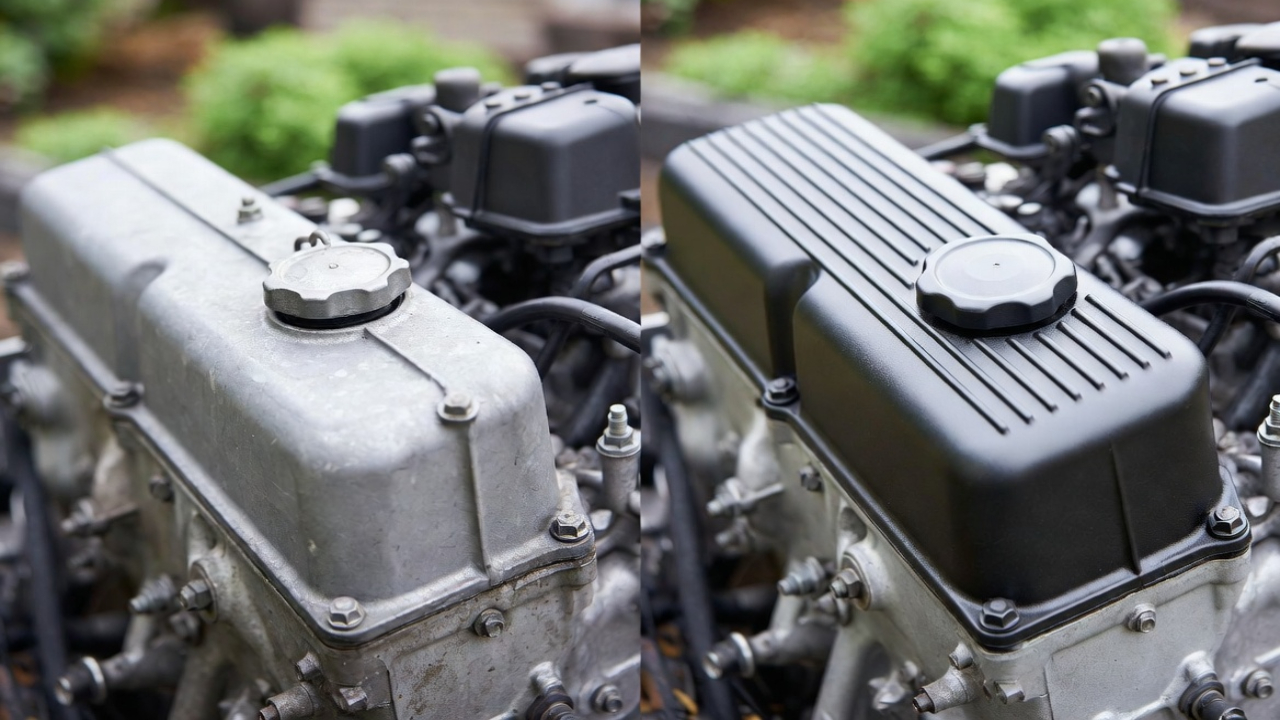
Yes. For 99% of modern vehicles, a valve cover and a rocker cover are the exact same component.
If you go to a store and buy a rocker cover gasket, it will fit your valve cover, and vice versa. They both refer to the removable metal or plastic "lid" that sits on the very top of your engine’s cylinder head.1
The Nuance: Why the Different Names?
If they are the same part, why does the industry use two names? It comes down to the history of engine design and where you live in the world.
- Rocker Cover: This term is technically a bit older. It refers to Overhead Valve (OHV) engines, commonly known as "pushrod" engines. In these designs, large "rocker arms" sit on top of the valves to open and close them. The cover’s primary job was to house those rockers - hence the name.
- Valve Cover: This is the universal modern term, especially in the United States and Canada. Since the component covers the valves (regardless of whether rockers are present), it’s the most straightforward description.
- Cam Cover: This is a third variation you’ll hear with Overhead Cam (OHC) engines. Because the camshafts are located right at the top, the cover is literally protecting the cams.
Function: What Does a Valve/Rocker Cover Actually Do?

Think of the valve cover as the "Tupperware lid" of your engine. While it might look like a simple piece of plastic or metal, it performs three critical jobs to keep your car running:
Oil Containment & Lubrication
Your engine is a high-pressure environment. To keep the valvetrain moving smoothly, oil is constantly sprayed over the cams, springs, and rockers. The cover keeps that oil inside the engine where it belongs. Without it, your engine would pump itself dry in minutes.
Debris Protection
Modern engines are built with incredible precision. Even a tiny grain of sand or road grit can score a camshaft or clog an oil passage. The cover acts as a shield against the outside world.
Engine Ventilation
The valve cover isn't just a lid; it’s part of the engine’s respiratory system. Most covers house the PCV (Positive Crankcase Ventilation) valve. This valve pulls harmful gases out of the crankcase and routes them back into the intake to be burned off, keeping your oil cleaner for longer.
Why the Terminology Changed
As car technology evolved, the language we use to describe it branched off in different directions.
Regional Differences
Language is often a matter of geography. If you are watching a DIY mechanic on YouTube from the UK, Australia, or South Africa, they will almost exclusively say "Rocker Cover." If you are in North America, "Valve Cover" is the industry standard.
The Evolution of Engine Design
In the "Golden Age" of muscle cars, almost every engine used a pushrod design with rocker arms. Today, most modern cars use Dual Overhead Cam (DOHC) setups. Since many of these engines don't use traditional rocker arms anymore, the term "Rocker Cover" is technically a bit outdated, but it has stuck around as a legacy term.
4 Common Symptoms of a Bad Valve Cover

Most people searching for this topic aren't just curious about vocabulary - they have a leak. Because the valve cover is at the very top of the engine, leaks here can be messy and even dangerous.
The "Hot Oil" Smell
This is usually the first sign. Oil leaks from the gasket and drips down the side of the engine block onto the exhaust manifold. Because the exhaust is incredibly hot, the oil burns instantly, creating a thick, pungent smell that often enters the cabin through the AC vents.
Visible "Wetness" and Grime
Take a flashlight and look at the seam where the cover meets the engine. If you see "wet" oil, or a thick buildup of black, greasy dirt (called "sludging"), your gasket has lost its seal.
Spark Plug Fouling & Misfires
On many modern cars, the spark plugs live in deep "wells" that go through the middle of the valve cover. If the inner seals of the gasket fail, oil will fill up these tubes. This "drowns" the spark plug and the ignition coil, leading to a rough idle or an engine misfire.
Low Oil Levels
While a valve cover leak is rarely as fast as a punctured oil pan, a constant "weep" can cause you to lose a quart of oil every few weeks. If you’re constantly topping off your oil but don’t see a puddle on the driveway, check the top of the engine.
The Gasket: The Real Culprit
When a mechanic says "you need a new valve cover," 90% of the time, they actually mean the gasket.
- The Cover: Usually made of aluminum or high-grade plastic. It rarely "breaks" unless the car was in an accident or a bolt was over-tightened.
- The Gasket: A thin strip of rubber, silicone, or cork that creates the seal. Over years of heat cycles (getting hot while driving and cold while parked), the rubber becomes hard and brittle. Once it cracks, oil escapes.
A Warning About Plastic Covers
If you drive a modern BMW, Audi, or Chevy, your cover is likely made of plastic. Unlike metal covers, these plastic units can warp or develop hairline cracks due to extreme heat. In these cases, simply replacing the rubber gasket won't fix the leak - you’ll need to replace the entire plastic cover assembly.
Replacement Cost & DIY Difficulty

Can you fix this yourself? For most people, yes. Replacing a valve cover gasket is considered a "Level 1" DIY task.
Estimated Costs
| Part/Service | Estimated Cost (DIY) | Estimated Cost (Shop) |
| Gasket Set | $20 – $60 | $150 – $300 |
| Full Cover Assembly | $80 – $250 | $400 – $700 |
| Labor Only | $0 | $150 – $500 |
Tools You Will Need
- A basic socket set (usually 8mm or 10mm sockets).
- A flat-head screwdriver (to help pry the old gasket).
- Degreaser or Brake Cleaner (to clean the mating surface).
- A Torque Wrench (This is the most important tool to avoid cracking the cover).
Pro-Tip: The "Mating Surface"
The secret to a leak-free repair isn't the brand of gasket you buy; it’s how clean you get the engine. Use a rag and some cleaner to make sure the metal surface is shiny and smooth before laying down the new seal.
Conclusion
Whether you call it a valve cover or a rocker cover, its job is the same: keeping the "lifeblood" of your car (the oil) inside the engine.
Terminology shouldn't stop you from maintaining your vehicle. If you smell burning oil or see a greasy mess under your hood, don't stress over the name. Focus on the gasket, keep your surfaces clean, and always use a torque wrench.
Common FAQ
Yes. "Cam cover" is just a more specific name used for engines with Overhead Cams. It is the same part.
You can, but it’s risky. Beyond the smell, oil can degrade your rubber radiator hoses and electrical wiring.11 In extreme cases, oil dripping on a glowing hot exhaust can start an engine fire.
Engine vibration can sometimes loosen the bolts. However, the more common reason is that the gasket has shrunk, creating a gap. Don't just tighten the bolts further - you’ll likely snap them. Replace the gasket instead.