
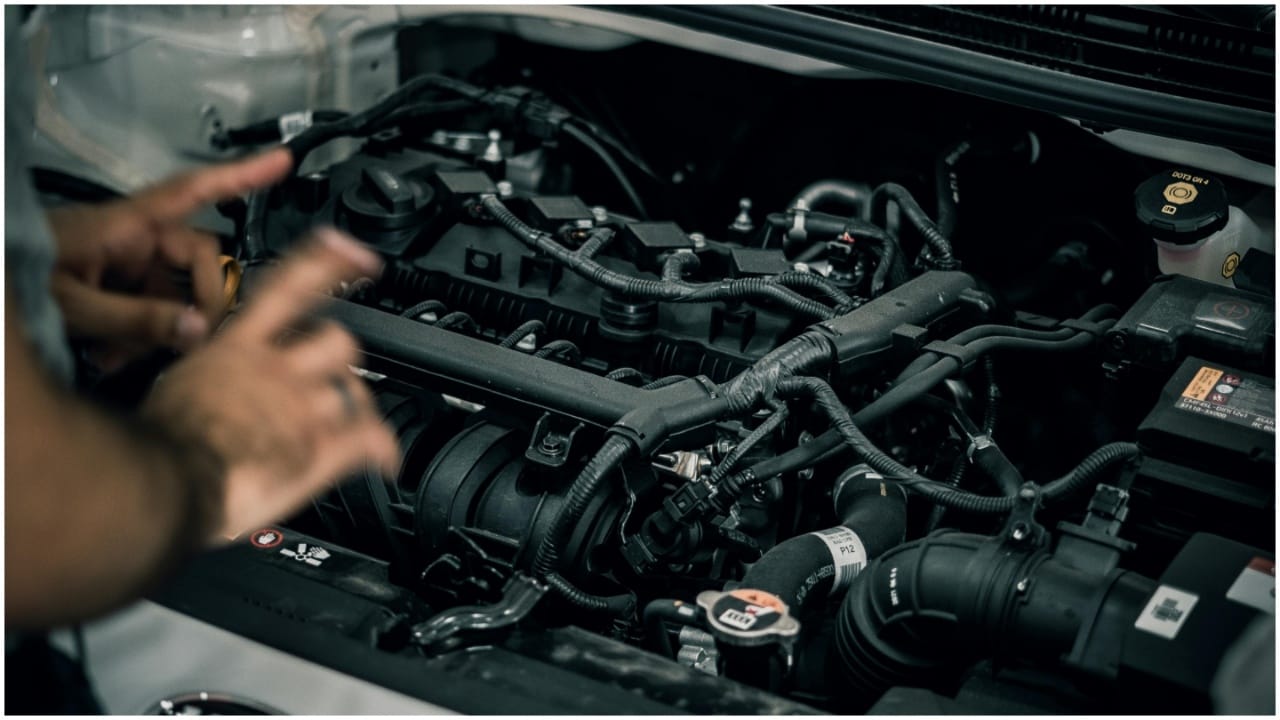
Even if your coolant reservoir is full, your engine can still overheat, and understanding why requires looking beyond just the coolant itself. The engine cooling system is a complex network where several components must work together seamlessly to keep temperatures in check.
When parts like the thermostat, radiator, water pump, or cooling fans fail, or if there are hidden air pockets or leaks, your engine’s temperature can rise dangerously. Let’s explore how these elements contribute to overheating and why simply adding coolant might not solve the underlying problem.
Coolant is Just One Part of the Puzzle
The thing is, coolant is not the whole solution to keeping your engine cool. Sure, it's the first thing you check when temperatures start climbing, and it's important, but it's not the only thing keeping your engine at a safe temperature.
Overheating could still happen for various reasons, even with coolant sitting in the tank. Think of your engine like a well-oiled orchestra.
Coolant is a key instrument, but it does not play solo. An ensemble of other parts works together to keep everything in tune.
When one of these instruments goes off-key, the performance can fall apart, and your engine might overheat—even if the coolant is all there.

Thorstone No Spill Coolant Funnel Kit - Spill Free Radiator Coolant Filling Funnel with Adapters for Universal Vehicles
The Thermostat Could Be Acting Up

Thermostats are usually the unsung heroes of car maintenance. But when they fail, things can go south quickly. The thermostat regulates the coolant flow through the engine.
Coolant can't circulate appropriately if stuck closed, no matter how much you have in the system. So, while your coolant reservoir might be complete, it's trapped in the wrong place.
A thermostat failure doesn't always give you a dramatic warning. It's just a gradual shift. One minute, the temperature gauge is standard; the next, it's in the danger zone. If you suspect a thermostat issue, it's worth checking it out.
Clogged Radiator: Coolant Can't Flow if It's Blocked
Now, let's talk about the radiator. The radiator is like the bodyguard for your engine, keeping it cool when things start heating up. But here's the catch - if the radiator is clogged, it's not doing its job.
A clogged radiator can prevent the coolant from circulating properly, even if plenty is in the system. And when coolant can't flow freely, the engine's temperature can skyrocket.
Radiators can become clogged with debris over time. Dirt, rust, and old coolant residue can build up, narrowing the channels. A thorough flush or replacement might be needed if you have a clogged radiator.
Water Pump: The Unsung Hero of Coolant Circulation
The water pump is another crucial player in the cooling system. It circulates the coolant throughout the engine and the radiator. If your water pump is failing, it's like the heart of the cooling system is stopping.
The coolant can't flow, the engine gets too hot, and you're left with an overheating issue, even though the coolant is correct where it should be.
Water pump failures can be sneaky. They gradually decrease efficiency but can also fail and cause an immediate issue. The signs of a bad water pump are more challenging to spot.
You might notice a squealing noise, coolant leaks, or fluctuating engine temperature. If your water pump is on its last leg, check it out sooner rather than later.
Airflow Problems: A Fan That Won't Fan
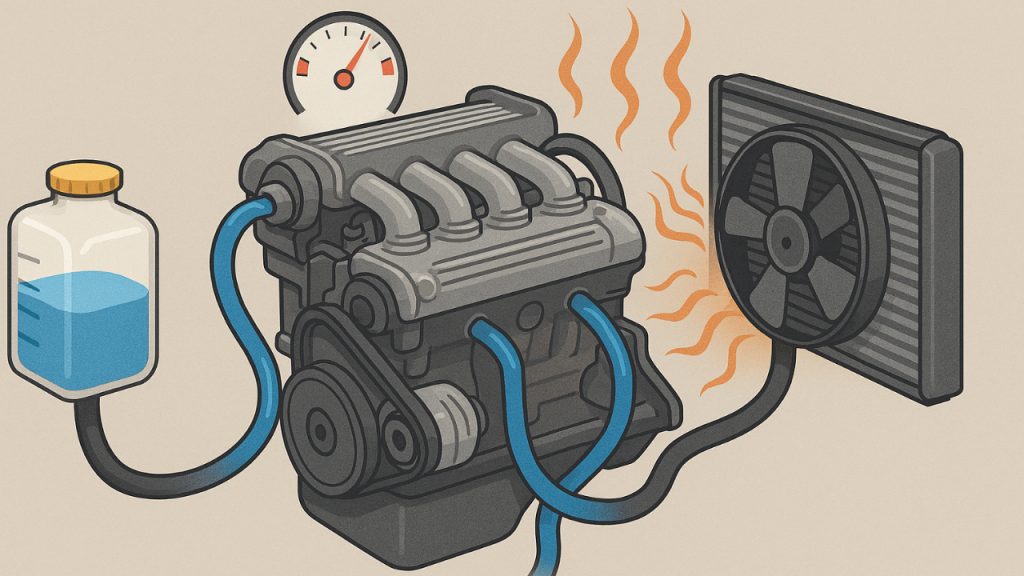
When you pop the hood and see the coolant levels are acceptable, but your engine is still heating up, don't forget to check your cooling fans. These fans move air through the radiator to help cool the coolant.
If a fan goes out or isn't working, the engine may overheat - even with coolant circulating as it should. It could be an electrical issue or something more mechanical, but whatever the reason, you won't get the cooling help you need.
Some cars have a single electric fan, while others rely on a belt - driven fan, but both are critical. If you hear a fan making strange noises or not turning on when you turn on the air conditioning, it might be time to replace it.
Air Pockets in the Cooling System
The cooling system must be free of air pockets for coolant to circulate properly. If there's air trapped inside, it can block the coolant's flow, leading to overheating. This can happen after a coolant change, a repair, or even because air slowly sneaks in over time.
If you suspect air pockets, you'll need to "burp" the system—essentially, bleeding the air out. This can usually be done by loosening a valve on the radiator or cooling system while the engine is running.
Cooling System Leaks
Leaks can be tricky, especially when the coolant is still showing as complete. The leak might not be big enough to show an immediate drop in the coolant level.
Instead, it could be a slow, gradual loss that doesn't become apparent until the overheating starts. Leaks can occur anywhere in the cooling system, from the radiator to the water pump.
If you've checked everything else and the problem persists, consider checking for leaks. Look for puddles of coolant under your car or white, powdery residue around the radiator or joints. Even small leaks can lead to more significant issues, so don't ignore them.
Electrical Issues

Your car's temperature gauge is powered by sensors that monitor the engine's temperature. If a sensor malfunctions, it might misread the temperature—making you think everything is fine when, in reality, the engine is starting to overheat.
This might explain why your coolant is full, but your engine still feels the heat. Temperature sensors can go bad, especially if your car is older or has seen some wear and tear.
Replacing a faulty sensor is usually a quick fix, but you should address it to avoid a false reading of your engine's health.
Conclusion
Engine overheating isn’t always about having enough coolant—often, it’s a sign that another part of the cooling system isn’t doing its job. From a stuck thermostat to a clogged radiator or a failing water pump, many factors can interfere with proper coolant circulation and heat dissipation.
Regular inspection and maintenance of the entire cooling system, including fans and sensors, are essential to prevent damage and keep your engine running smoothly. Don’t overlook these vital components when addressing overheating issues to ensure your engine stays cool and healthy.
Common FAQ's
Truck overheating but has coolant going signals issues like a stuck thermostat blocking flow, clogged radiator restricting heat dissipation, or failing water pump. Air pockets, head gasket leaks, or faulty radiator cap can trap heat despite circulating coolant—check these fast to avoid engine damage.
Blame a stuck thermostat blocking flow, clogged radiator trapping heat, faulty water pump, or air pockets. Fans might spin, but poor circulation dooms cooling—flush system, test parts fast.
Car still overheating after adding coolant? Stuck thermostat blocks flow, clogged radiator traps heat, bad water pump fails circulation, or fan issues hinder cooling. Check leaks, air pockets - get pro diagnosis quick to save your engine.
Yes, radiator pulls coolant from reservoir via vacuum when cooling down after heat expansion pushes excess out. Radiator cap's valve enables this flow back, maintaining levels - faulty cap blocks it.