
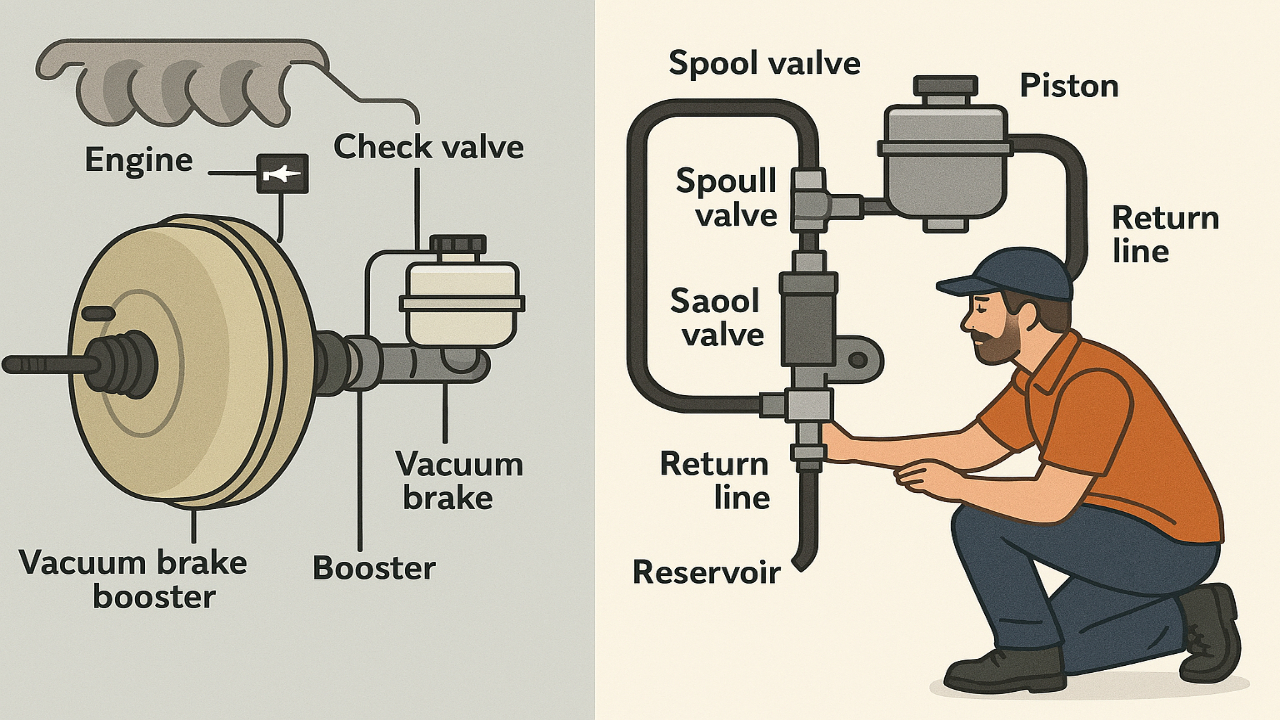
Discover vacuum brake booster vs hydroboost differences in power, reliability, and cost. Learn pros, cons, and which is best for your truck or diesel engine.
Ever slammed on the brakes and felt that reassuring push back? That's your brake booster doing its job. Braking isn't just stopping - it's saving lives. NHTSA data shows vehicles with reliable brakes cut crash risks by up to 50%. Faulty boosters? They double your stopping distance.
But not all boosters are created equal. Vacuum brake boosters rule most gas cars. They sip engine vacuum for power. Hydroboost systems? They tap your power steering pump. No vacuum needed. These beasts dominate diesels and heavy trucks.
This ultimate guide pits vacuum brake booster vs hydroboost head-to-head. We'll break down how they work. Pros. Cons. Real-world examples. DIY installs. Even upgrade scenarios for your F-150, Jeep, or Cummins rig. By the end, you'll pick the winner for your garage. Strap in - let's boost your braking knowledge.
How Vacuum Brake Boosters Work: The Simple Classic

Vacuum power brakes keep it basic. They turn light pedal taps into monster stopping force. Most drivers never think about them. Until they fail.
The Vacuum Magic Explained
Your engine's intake manifold creates vacuum. At idle, expect 15-20 inches of mercury. Convert that? About 10 PSI of pull. The booster splits into two chambers. A flexible diaphragm sits smack in the middle.
Press the pedal. A control valve opens. Vacuum equalizes both sides first. Then? Atmospheric air rushes into the front chamber. Boom - 14.7 PSI of air pressure slams the diaphragm backward. This multiplies your force 4-6 times. Straight to the master cylinder.
Picture sucking soda through a straw. Vacuum holds it. Release? Pressure surges. Same deal here. Gas engines have vacuum to spare. That's why vacuum boosters became standard in the 1950s. Still rule cars like Civics, Mustangs, and stock F-150s.
Real-World Performance
On a stock 5.0L V8? Perfect. 1000-1100 PSI output. Stops smooth. But heavy throttle kills vacuum. Wide-open throttle (WOT)? Vacuum drops to zero. Pedal goes hard. Drag racers and turbo builds hate this.
Common Issues and Quick Fixes
Hiss from the booster? Vacuum leak. Spray carb cleaner on hoses. RPM jump means leak. Cracked plastic lines? Upgrade to silicone. Low vacuum engines need a canister. Think 2-5 gallons sized right.
Pros:
- Super lightweight: Under 10 lbs total.
- Dirt cheap: $100-300 for quality units.
- Dead simple: Yearly hose checks. Done.
Cons:
- Vacuum starvation in mods. Big cams or turbos? Disaster.
- No go for diesels. Zero manifold vacuum.
- Age cracks hoses. Leaks sneak up.
How Hydroboost Systems Work: Hydraulic Powerhouse

Hydroboost flips the vacuum script. It uses hydraulic brake assist from your power steering pump. No engine vacuum. Pure fluid muscle.
Inside the Hydroboost Beast
Power steering pumps spin at 1000-3000 PSI. Insane pressure. Hydroboost grabs it via a high-pressure hose. A spool valve inside acts like the brain. Light pedal press? Valve shifts. Fluid slams a piston.
That piston? Replaces the vacuum diaphragm. Output force? 2400-2700 PSI. Double the vacuum max. Fluid returns to the reservoir. Clean loop. Diesels love it—no vacuum anyway. Even gas trucks benefit.
Backup built - in. Pump quits? Accumulator spring gives 2-3 assisted pumps. Then manual mode.
Everyday Feel and Sounds
Hard stop? You might hear a whine. Pump straining. Normal for hydroboost braking systems. Gets quieter with fresh ATF fluid. Heat? No issue. Hoses don't crack like vacuum lines.
Vehicle Fitment Tips
Cummins Rams? Factory hydro. Jeeps with big tires? Popular swap. Needs Saginaw or SII pump. Check belt tension - slack kills pressure.
Pros:
- Monster power: 2400-2700 PSI peaks.
- Vacuum-free: Turbos, diesels, boosted rides thrive.
- Tough as nails: Heat and abuse proof.
Cons:
- Chunky: 15-20 lbs heavier.
- Steering linked: Pump fail hurts both.
- Pricey setup: Custom lines add up.
Vacuum Brake Booster vs Hydroboost: Side-by-Side Comparison Table
Skip the fluff. Here's the data dump.
| Aspect | Vacuum Brake Booster | Hydroboost |
|---|---|---|
| Power Source | Engine intake vacuum (15 PSI max) | Power steering hydraulics (1000+ PSI) |
| Braking Force | 1000-1100 PSI typical | 2400-2700 PSI max |
| Best For | Stock gas vehicles, lightweight cars | Diesels, heavy-duty trucks, off-road rigs |
| Cost (Parts) | Lower ($100-300) | Higher ($400-800) |
| Weight | 8-10 lbs | 15-20 lbs |
| Maintenance | Rare leaks, hose checks | Fluid changes, pump belts |
| Failure Mode | Soft/hard pedal from vacuum loss | Weaker assist if pump dies |
| Noise | Silent | Possible whine on hard stops |
| Heat Resistance | Fair (hoses crack) | Excellent |
Vacuum saves cash. Hydroboost saves lives in tough spots.
Pros and Cons Deep Dive: Real Garage Stories

Theory's cool. Real trucks tell the truth. Vacuum for commuters. Hydroboost for haulers.
Vacuum Pros That Shine
- Wallet-friendly: My buddy swapped his Silverado's booster for $150. Done in 90 minutes.
- Whisper quiet: No pumps. Ideal for daily F-150 gas hauls.
- Match made: Stock Civics, Mustangs, even older Broncos. Plug-and-play.
Vacuum Cons That Bite
- Mod killer: Customer's turbo Fox Body? Vacuum gone at boost. Pedal to floor.
- Leak city: 10-year hoses crack. Hissing means danger.
- Diesel no-go: Ram 2500 Cummins? Vacuum booster laughs last.
Hydroboost Pros in the Wild
- Titan stopping: Towing 10k with F-250? Hydro halts it dead. Vacuum fades.
- Off-road king: Jeep Wrangler TJ on 35s. Vacuum fails trails. Hydro conquers.
- Cummins factory pick: Dodge trucks stop on dimes stock.
Hydroboost Cons Exposed
- Whine factor: First hard stop? Pump sings. Fluid fix quiets it.
- Dual risk: Worn pump? Steering and brakes suffer.
- Wrangler swap tale: 4WD forum guy spent $900. Worth every penny for rocks.
Quick Verdict: Gas daily? Vacuum. Diesel/tow/off-road? Hydroboost every time.
Installation Guide: Full DIY Steps for Both
DIY beats shop bills. Save $500+. Tools: Jack stands, 13mm wrench, vacuum gauge, flare nut tool, PB Blaster.
Vacuum Booster Swap: 2-4 Hours Easy
- Prep: Jack front end. Wheels chocked. Disconnect battery.
- Drain: Bench-bleed master cylinder first. No spills.
- Remove: Four firewall nuts. Two master bolts. Pedal clip. Vacuum hose.
- Swap: Match diameter (8", 9", 11"). New check valve.
- Install: Lube pushrod. Torque to 20 ft-lbs. Reconnect hose.
- Test: 18+ inHg vacuum. Pump pedal firm. Road test.
Pro Tip: Low vacuum? Add 3-gal canister. $50 fix.
Hydroboost Install: 4-6 Hours Pro
- Drain: Power steering flush first. Catch fluid.
- Dismantle: Old booster out same as vacuum.
- Mount: Firewall bracket. Torque 25 ft-lbs.
- Plumb: High-pressure hose from pump. Flare fittings 37 degrees.
- Return: To reservoir. No kinks.
- Bleed: Engine run. Turn wheel lock-to-lock 20x. Top ATF.
- Tune: Adjust pushrod 1/16" gap. Firm pedal.
Safety: Bed in pads after. No joyrides first.
When to Upgrade: Triggers and Cost Math

Stock brakes okay? Maybe. But here's when to act.
Vacuum Upgrade Red Flags
- Soft pedal post-cam swap. Canister time.
- Hissing. Leaks double stop distance.
- Math: $200 booster < $1000 big brake kit.
Hydroboost Swap Signals
- 35"+ tires. Vacuum can't hack it.
- Heavy towing. 10k+ lbs? Hydro only.
- Diesel conversion. No choice.
- F-250 story: 37s ate vacuum. Hydro transformed stops.
Cost Breakdown:
| Type | Parts Cost | DIY Time | Shop Cost | Fluid Cost |
|---|---|---|---|---|
| Vacuum | $200 | 3 hours | $500 | $0 |
| Hydroboost | $650 | 5 hours | $1200 | $30 |
Light gas rig? Vacuum holds. Heavy duty? Hydroboost pays off.
Common FAQ
Hydroboost beats vacuum for Jeeps with 33"+ tires or off-road. Delivers 2400 PSI power, no vacuum loss on trails. Vacuum works fine for stock TJ/YJ (31" tires) on pavement. Upgrade if lifting - hydroboost stops better when loaded.
Hydroboost whine is normal from power steering pump strain during hard braking. Fix it fast: check low ATF fluid, change dirty fluid yearly, tighten loose belts. Fresh Dexron III quiets 90% of noise. Still loud? Pump may need rebuild.
Hydroboost is the best brake booster for diesel trucks. Diesels make zero engine vacuum, so vacuum boosters fail completely. Hydroboost delivers 2400-2700 PSI from power steering pump. Perfect for Ram Cummins, Ford Power Stroke, or Duramax. No other option works.
Hard pedal that needs heavy push means vacuum booster failing. Hissing noise from hoses shows leaks. Pedal sinks slowly or drops on engine start. Test: vacuum gauge under 15 inHg at idle. Cracked hoses confirm it. Fix fast - safety risk.
Hydroboost costs more upfront ($650 vs $200 vacuum) but lasts 100k+ miles in trucks. Vacuum boosters fail every 60k from hose cracks. Hydro needs yearly ATF ($30). Long-term, hydroboost cheaper for heavy use - fewer failures, better safety.