
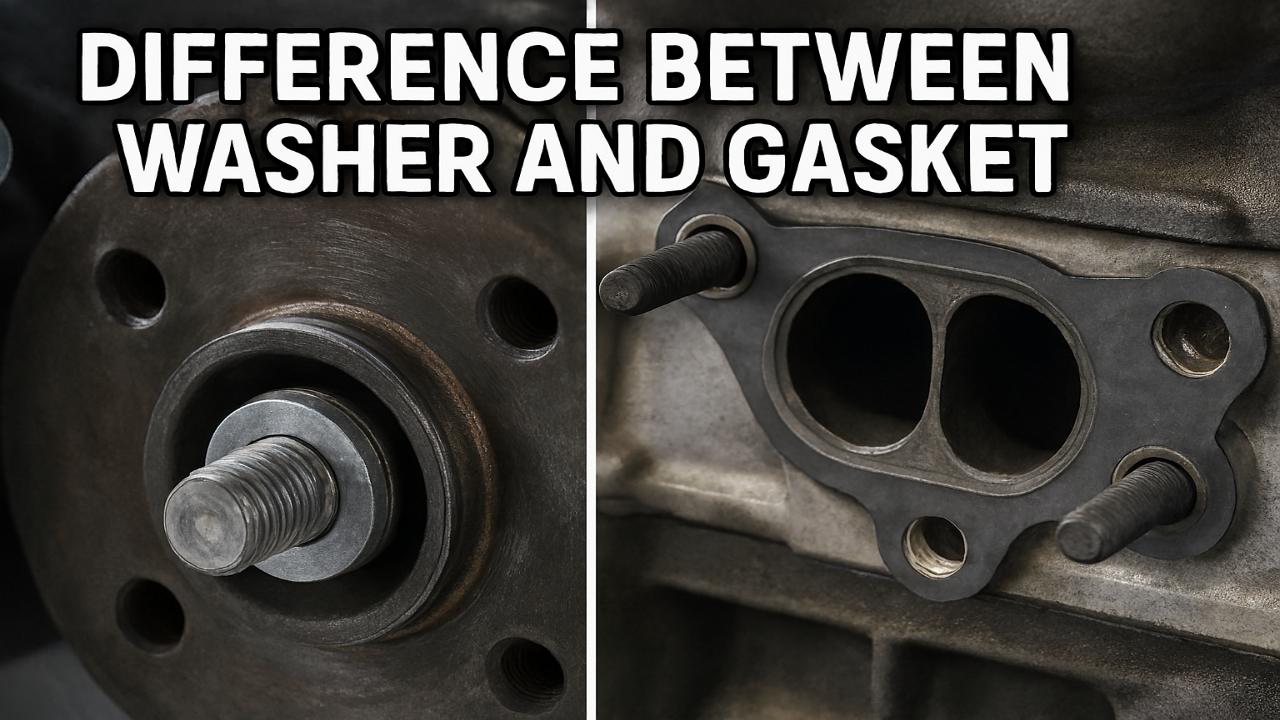
Hey car lovers! If you like fixing your own car or just want to know more about what makes it run well, this is for you. Washers and gaskets might look a bit alike, but they do very different things. Many DIY folks get them mixed up, and that can lead to big problems like leaks or a broken engine.
A washer helps bolts by spreading out the pressure. A gasket seals parts to stop oil or coolant from leaking. Using the wrong one? You could face overheating, low oil, or even safety risks on the road.
In this long blog post, we will go deep into what each is, how they differ, their effects on your car, common types, failure signs, tips for care, and more. By the end, you will feel like an expert on these small but important car parts.
What Is a Washer in a Car?
Washers are small, flat pieces often made of metal. They have a hole in the center. You slide them onto a bolt before you tighten the nut.
Here are the main jobs of washers in cars, explained in detail:
- Spreads the force evenly: When you tighten a bolt, the washer stops the bolt head from digging deep into the surface. This keeps the part from cracking or bending. Without it, soft metal like aluminum can get damaged fast. It makes sure the pressure is spread out like butter on bread.
- Reduces friction during tightening: Bolts can stick or rub hard when turned. A washer makes the turn smoother. This helps you get the right tightness without extra effort. It also stops metal from wearing out too soon.
- Prevents bolts from loosening: Cars vibrate a lot on bumpy roads. Washers, especially lock ones, grip tight to keep bolts in place. This stops parts from shaking loose over time. It adds safety for things like wheels or suspension.
You see washers in many spots on a car. Wheel lug nuts use them to hold tires secure. Suspension bolts need them for a stable ride. Exhaust manifold bolts handle heat with washers. Battery terminals use them for good connections.
Most washers are steel for strength. Stainless steel stops rust in wet areas. Nylon washers insulate electricity. Spring steel ones bounce back to lock better.
When washers work right, your car stays safe and lasts longer. Bolts hold firm. Vibrations do less harm. Parts do not wear out quick. But if you forget them or pick the wrong size, trouble starts. Bolts loosen. Surfaces crack. Even wheels can wobble off – scary stuff!
What Is a Gasket in a Car?
Gaskets are soft seals that fit between two flat surfaces. They compress when bolted down. This creates a tight barrier.
Let's break down their key roles with more info:
- Stops leaks of fluids and gases: Gaskets block oil, coolant, fuel, or exhaust from escaping. They keep everything inside where it belongs. If a leak happens, your engine can run dry or overheat. This seal is vital for clean, efficient running.
- Fills tiny gaps and imperfections: Engine parts are not perfectly smooth. Gaskets squash to fill those rough spots. This makes a perfect fit even on uneven surfaces. It stops small drips that could turn into big messes over time.
- Handles heat changes and movement: Engines get very hot then cool down. Parts expand and shrink. Gaskets flex without breaking the seal. They absorb shakes from driving too. This keeps the seal strong no matter the temperature.
Gaskets show up in critical car areas. The head gasket seals the engine block and cylinder head for compression. Exhaust manifold gaskets deal with hot gases. Valve cover gaskets keep oil in the top. Oil pan gaskets seal the bottom. Intake manifold gaskets handle air flow. Thermostat housings use small ones for coolant control.
Materials matter a lot. Multi-layer steel (MLS) for tough head jobs. Rubber or cork for flexible valve covers. Graphite for high-heat exhaust. Silicone resists chemicals. Composites mix strength and softness.
With good gaskets, your engine performs well. Pressure stays high. Fluids do not mix. Heat is controlled. No fumes enter the cabin. But if they fail or you use the wrong one, leaks start. Fluids mix badly. Engine damage happens quick. Repairs cost a lot.
Key Differences Between Washer and Gasket
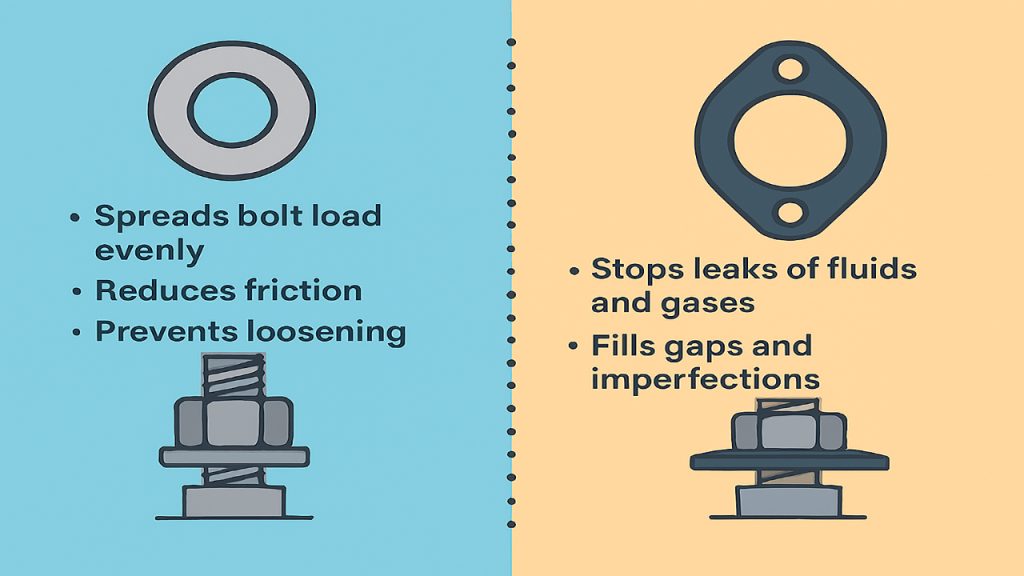
To make it easy, here is a comparison table:
| Aspect | Washer | Gasket |
|---|---|---|
| Main Job | Spreads bolt load, stops loosening | Stops leaks of oil, coolant, gases |
| Hard or Soft | Hard, almost no squeeze | Soft, squeezes a lot |
| Material | Metal (steel, stainless) | Rubber, cork, metal layers, composite |
| Place in Car | Under bolt heads or nuts | Between two engine surfaces |
| Stops Leaks? | No | Yes, main job |
| What Happens If Wrong | Loose bolts, cracked parts | Leaks, overheating, engine failure |
| Size and Shape | Small round | Big, shaped to fit exact part |
Washers are for bolt support. Gaskets are for sealing. Never mix them up. The table shows how different they are in every way.
Effects on the Car: What Happens If You Confuse Washer vs Gasket?
Mixing washers and gaskets is a bad idea. It leads to quick problems. Let's look at what goes wrong.
- Using a washer instead of a gasket means no good seal. Leaks begin right away. For example, in an oil pan, oil drips out fast. Engine parts rub without lube. This can cause total engine seizure.
- In coolant areas, like a thermostat, coolant escapes. The engine gets too hot. Heads warp or crack under the heat. Fixing that can cost thousands.
- For exhaust, gases leak out. You hear loud noise. Power drops. Emissions fail tests. Worst, CO gas can enter the car – real danger.
- Now, using a gasket as a washer? It is too soft for the job. Pressure is not even. Surfaces bend or warp from uneven force.
- Bolts can pull through the soft material. Threads strip out. Parts like flanges crack apart.
- In head areas, this causes big issues. Coolant and oil mix into milky sludge. Engine knocks loud. It fails soon after.
- Wheel mistakes make lugs loose. Wheels shake or come off. Driving becomes unsafe.
- Valve covers leak slow. Oil levels drop. Engine wears faster than normal. Small error, big long-term cost.
Always use the right part. Confusion hurts performance, safety, and your wallet.
When Washers and Gaskets Work Together in Cars
Often, they team up in car designs. This combo works best. Here are details on how:
- Exhaust manifold setup: Gasket seals the hot exhaust ports tight. Washers under bolts spread the clamping force even. This stops the gasket from crushing too much. Joint stays leak-free under heat.
- Intake manifold assembly: Gasket handles air and fuel seal. Washers ensure bolts hold without warping the manifold. Even torque keeps vacuum strong. No air leaks affect engine power.
- Oil pan installation: Bottom gasket seals oil in. Washers on bolts prevent over-tightening the pan. This avoids dents or cracks in the pan. Oil stays full for smooth running.
- Other engine covers: Like valve covers, gasket stops oil splash. Washers make sure cover sits flat. No gaps form over time. Keeps engine clean inside and out.
Key rules for using both: Follow the manual's torque order, like star pattern. Tighten in steps to build pressure slow. Always use a torque wrench for exact specs. Never swap or skip parts. This team makes joints strong and sealed.
Common Types in Automotive Use
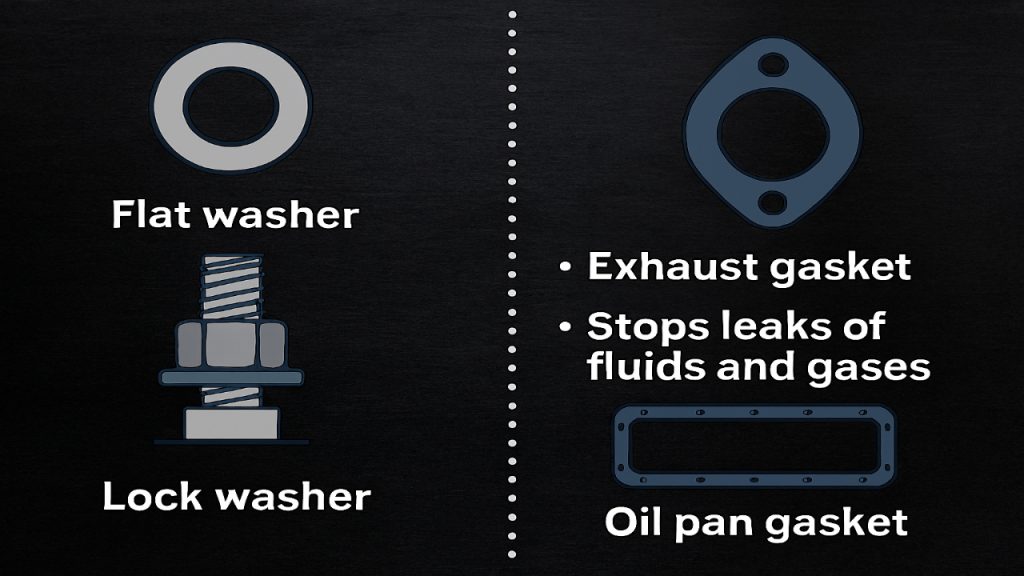
There are many kinds for specific needs. Choosing right matters.
Washer types explained:
- Flat washer: Simple and cheap for basic load spread. Use on soft surfaces to protect them. Common in many bolted spots. Keeps things even without fancy features.
- Lock washer: Split or toothed to fight vibration. Bites into metal for extra grip. Perfect for suspension or engine mounts. Stops loosening on rough roads.
- Fender washer: Extra wide rim for thin sheet metal. Spreads force over big area. Prevents pull-through on body panels. Good for custom or repair work.
- Crush washer: Soft copper or aluminum that deforms once. Used for light sealing like oil drains. Not a full gasket replacement. Squishes to fill small gaps.
Gasket types with more info:
- MLS head gasket: Layers of steel for high strength. Handles extreme pressure in modern engines. Coated for better seal. Best for performance cars.
- Exhaust gasket: Graphite or multi-layer to survive 1,000°F heat. Seals gases without burning. Often reusable in some cases. Keeps exhaust quiet and efficient.
- Valve cover gasket: Rubber or cork for flexibility. Easy to install and remove. Fits curved covers well. Stops oil from leaking onto hot parts.
- Oil pan gasket: Formed rubber for uneven pans. Absorbs engine movement. Seals well even if pan is dented. Keeps oil from dripping on driveway.
Always match type to the car's manual. Wrong type fails faster.
Signs of Washer or Gasket Failure in Your Car

Watch for these signs. Fix them early.
Washer failure signs:
- Rattling or buzzing noises: Loose parts shake from bad washers. Vibrations get worse over bumps. Check bolts right away. Tighten or replace to quiet it down.
- Loose wheels or parts: Wheels wobble if lug washers fail. Suspension feels unstable. Battery connections spark. Inspect often to avoid accidents.
- Stripped or damaged bolt threads: Uneven load ruins threads. Bolts won't hold tight. Parts slip or break. Use right washers to prevent this wear.
Gasket failure signs:
- White smoke from exhaust: Coolant burns inside engine. Comes from head gasket leak. Smells sweet too. Stop driving and fix fast.
- Milky or foamy oil on dipstick: Coolant mixes with oil. Looks like chocolate milk. Ruins lubrication. Engine damage starts quick.
- Oil or coolant puddles under car: Visible leaks from bad seals. Check where it drips from. Clean and replace gasket. Stops bigger issues.
- Engine overheats often: Gauge rises high from coolant loss. Fans run non-stop. Pull over safe. Could be thermostat or head gasket.
- Less power or rough running: Compression drops from leaks. Engine stutters or slows. Feels like misfires. Get a check-up soon.
Regular checks save money. Look under hood monthly.
Maintenance Tips and Best Practices
Good habits keep these parts working.
- Use torque wrench always: Gets exact tightness from manual. No guessing. Stops over or under tightening. Protects gaskets and washers.
- Clean surfaces before install: Dirt or old gasket bits ruin new seals. Use scraper and cleaner. Makes flat contact. No leaks from start.
- Choose OEM parts for key spots: Original maker parts fit best. Especially head gaskets. Last longer than cheap ones. Worth the extra cost.
- Inspect for leaks every oil change: Look under car and hood. Spot drips early. Tighten loose bolts. Catch problems before they grow.
- Do not reuse old gaskets: Most crush flat once used. Lose shape and seal. Always buy new. Saves trouble later.
- Keep parts dry and clean: Store in dry place. No rust or dirt. Wipe before use. Ensures good fit and long life.
- Ask mechanic for big jobs: Head gaskets need special tools. DIY small stuff only. Pros do it right first time.
Follow these and avoid most failures. Your car thanks you with smooth drives.
Common Myths About Washers and Gaskets

Some wrong ideas float around. Let's clear them.
- They are basically the same: False. Washers support. Gaskets seal. Different shapes and materials prove it. Mixing causes damage.
- Thicker is always better: No. Must match exact thickness from manual. Too thick leaks. Too thin crushes. Specs matter most.
- Reuse gaskets to save money: Mostly wrong. They deform after use. Lose sealing power. New ones are cheap insurance.
- Skip washers to save time: Bad idea. Bolts dig in without them. Surfaces damage. Loosening happens faster. Always use them.
Knowing truth helps better repairs.
Conclusion
To wrap it up, washers and gaskets are key small parts in cars. Washers make bolts work better by spreading load and stopping looseness. Gaskets keep fluids and gases sealed tight for smooth engine run.
Get them wrong, and your car faces leaks, heat issues, or full breakdowns. Always read the manual. Pick the correct part and type. Use quality items, especially for important spots like the head.
With right knowledge and care, your car stays reliable and safe. Drive smart, fix right, and enjoy the road longer!
Related FAQ's
No, a washer and a gasket are not the same thing at all. A washer spreads bolt pressure and prevents loosening, while a gasket seals fluids and gases to stop leaks. Mixing them up can cause serious engine damage, leaks, or safety issues. Always use the correct part for the job.
No, a polyurethane washer and a gasket aren't the same. Polyurethane washers are tough, flexible spacers that distribute bolt load, dampen vibration, and resist wear. Gaskets are made to compress and seal fluids or gases between surfaces. Swapping them usually causes leaks or loose joints.
Check your vehicle’s service manual first - it lists the exact part needed. If the job requires sealing fluids/gases (oil, coolant, exhaust), pick a gasket. For spreading bolt load and preventing loosening, choose a washer. Match material, size, and type to the application.
Check your manual for size, thickness, and ID/OD specs. Pick nylon or Delrin for low-friction, vibration resistance, or electrical insulation. Avoid plastic in high-heat or heavy-load spots - use metal instead. Match the application to prevent cracking or loosening.
A large rubber washer or gasket is essential for creating airtight, watertight seals in plumbing, automotive, and industrial applications. Its durable, flexible material ensures reliable performance under pressure, vibration, and temperature changes - making it a simple yet critical component in countless mechanical systems.

Gerry is a certified automotive expert and founder of AutomotiveAH.com, specializing in vehicle maintenance, diagnostics, and engine systems, delivering trusted, research – driven automotive guidance.