
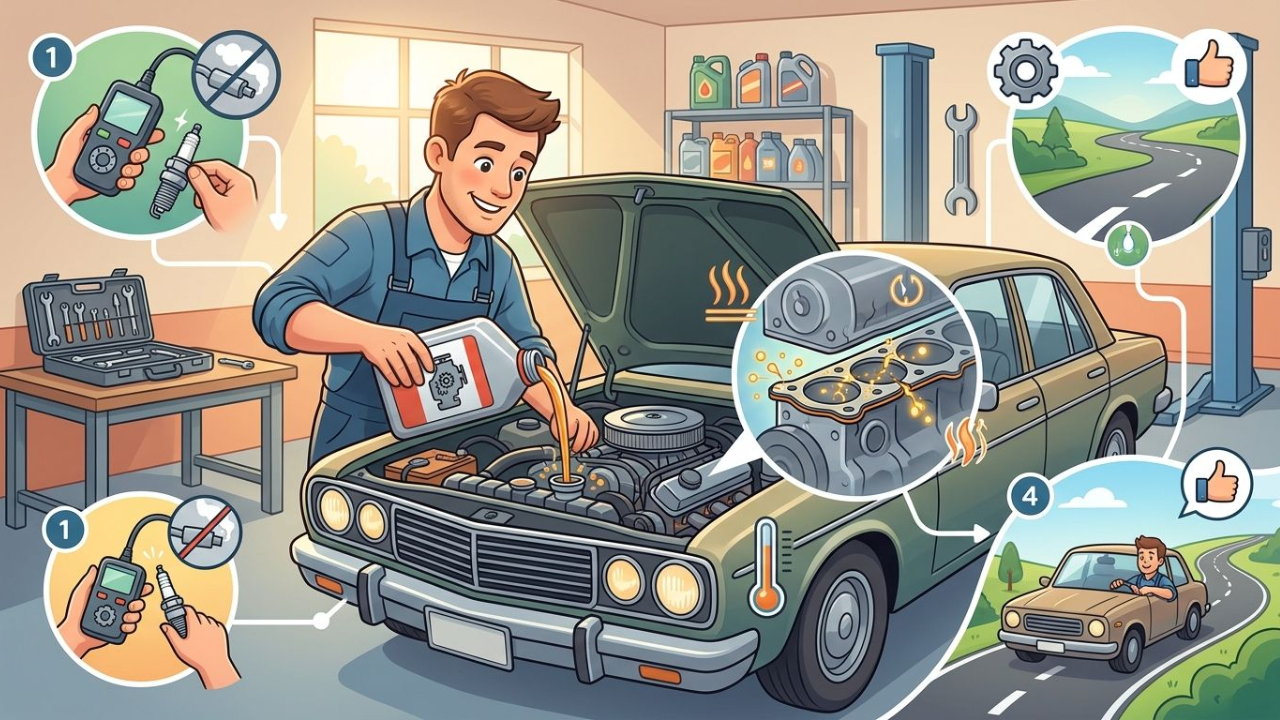
Hearing a mechanic say "you’ve got a blown head gasket" usually sends a spike of adrenaline straight through your chest. It’s one of the most feared phrases in automotive repair, and for good reason. Replacing a head gasket isn't just about swapping out a $40 piece of multi-layer steel-it involves stripping your engine down to its core block. The labor costs alone can easily run anywhere from $1,500 to upwards of $3,500.
If your vehicle is an older daily driver, a work truck, or something you aren't ready to drop thousands of dollars into, a chemical head gasket sealer is a logical crossroad.
As someone who has spent years under the hood diagnosing cooling system failures, I’ve seen chemical sealers perform near-miracles that bought cars another 50,000 miles. I’ve also seen them turn heater cores into solid bricks of gel when applied incorrectly.
Before you spend money on a quick fix or tow your car to a scrap yard, let’s go over how these liquid formulas operate, which ones actually hold up under real-world combustion pressure, and how to tell if your engine is a candidate for a chemical repair.
What Is a Liquid Head Gasket Sealer?
Think of a head gasket sealer as a specialized, high-temperature chemical bandage engineered for your cooling system.
Your engine's head gasket sits pinched tightly between the engine block (the lower half housing the pistons) and the cylinder head (the upper half holding the valves). Its job is to maintain a high-pressure barrier between three distinct chambers:
- The Combustion Chambers (where fuel ignites at extreme pressure and heat).
- The Coolant Passages (where antifreeze circulates to draw away heat).
- The Oil Channels (where engine oil lubricates moving metal).
When a head gasket "blows," the internal seal degrades, creating a microscopic gap. Liquid head gasket sealers are poured directly into your cooling system. As the fluid circulates, it seeks out areas of high differential pressure and extreme thermal spikes-the exact physical environment created by a combustion leak-and triggers a chemical or physical hardening reaction to plug the gap.
The Science: How Chemical Sealers Cure Under Pressure
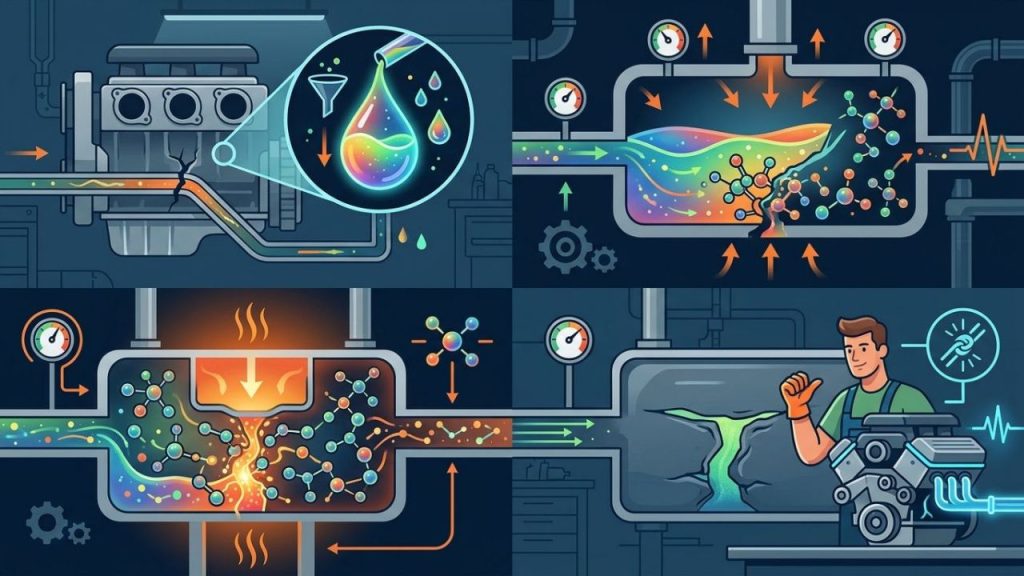
Not all sealers are created equal. In the automotive market, formulas generally rely on two chemical mechanisms to seal leaks:
Sodium Silicate Formulas ("Liquid Glass")
- How It Works: Sodium silicate is a clear chemical compound suspended in water. It travels harmlessly through normal coolant streams. However, when it escapes through a gasket leak into a combustion chamber or exhaust path, it hits localized temperatures exceeding 200°F to 300°F (93°C–149°C).
- The Chemical Reaction: The intense heat instantly evaporates the liquid carrier, causing the silicate to undergo thermal polymerization—literally turning into a rock-hard, glass-like chemical structure that bonds to surrounding iron or aluminum.
- Mechanic’s Take: Pure sodium silicate formulas offer superior high-pressure resistance. Because they contain zero solid particles, they carry a significantly lower risk of clogging tight radiator tubes or heater core passages when installed correctly.
Micro-Fiber & Ceramic Particle Blends
- How It Works: These formulas use a liquid resin carrier packed with suspended microscopic solids—often a combination of copper dust, ceramic micro-fibers, aramid fibers, or carbon.
- The Physical Reaction: As cooling pressure pushes the fluid through a hairline fissure, these tiny particles wedge themselves inside the gap, building a physical "mesh" or bridge. Thermal curing agents in the liquid then harden around the particle matrix to lock it in place.
- Mechanic’s Take: These "pour-and-go" products require far less prep work and mix safely with standard antifreeze. However, if your cooling system is already contaminated with rust, scale, or heavy sludge, those suspended solids can accumulate in narrow cooling channels.
Deep-Dive: The 4 Best Head Gasket Sealers on the Market

1. Steel Seal Blown Head Gasket Fix — Best Overall
If you ask seasoned techs which sealer they trust on a customer's budget-conscious vehicle, Steel Seal routinely tops the list. Unlike cheaper additives that rely on thick sludge or metal dust, Steel Seal is a clear, pure chemical formula.
- The Mechanism: It relies on a multi-stage thermo-chemical reaction that activates under engine operating temperatures. It forms a permanent, hardened glass-like seal across the damaged area of the gasket.
- Why It Leads the Pack: Because it contains zero solid particulates or raw copper shavings, it will not clog your vehicle's heater core or radiator tubes. Furthermore, Steel Seal scales its application by engine size (e.g., 1 bottle for 4-cylinders, 2 bottles for V6/V8s) to ensure proper chemical concentration.
- The Trade-Off: It commands a premium price tag compared to off-the-shelf pour-and-go options.
- Best Suited For: Modern engines, aluminum heads, and vehicle owners looking for a long-term repair without risk to their heating system.
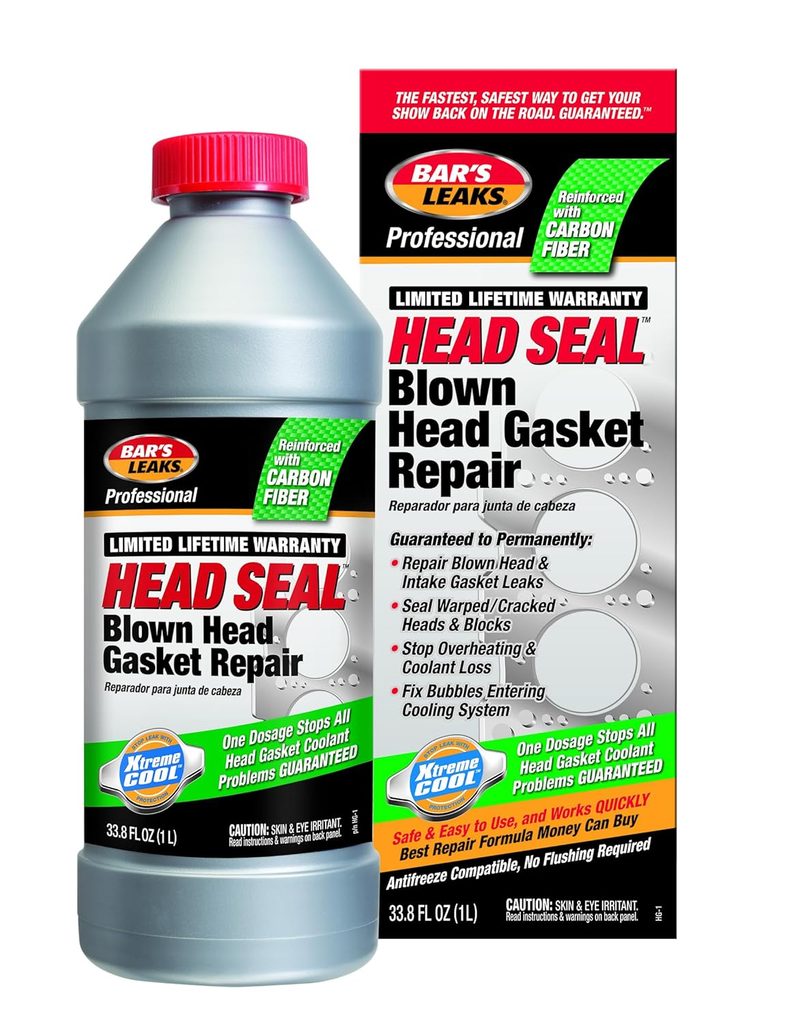
2. BlueDevil Head Gasket Sealer - Best Professional Choice
BlueDevil is widely regarded as the gold standard in chemical gasket repair. It penetrates deep into tiny hairline fractures that other sealers flow past. However, it comes with a major caveat: you must follow the application directions to the exact letter.
- The Mechanism: BlueDevil is a concentrated liquid chemical formula containing no solid filler matter. When it comes into contact with the high heat leaking from a combustion chamber, it bonds chemically to aluminum and cast iron.
- Why Mechanics Respect It: When applied correctly, BlueDevil boasts one of the highest permanent success rates in the industry. It can withstand extreme cylinder pressures once fully cured.
- The Trade-Off: The prep work is mandatory and labor-intensive. You must drain your cooling system, flush out all old antifreeze, pull the thermostat out, fill with pure water and BlueDevil, idle the vehicle for 50 minutes, and then perform a fresh coolant refill. If you skip the flush and pour BlueDevil into dirty antifreeze, it can gel and ruin your radiator.
- Best Suited For: Capable DIYers willing to spend 2 hours doing proper prep work for a shop-grade result.
3. K-Seal Coolant Leak Repair (ST3501 / ST5501) — Best Value / Quick Fix
If you are stranded on the side of the highway or need your car running by tomorrow morning without touching a wrench, K-Seal is the go-to emergency solution.
- The Mechanism: K-Seal uses a proprietary mixture of micro-ceramic fibers and fine copper powder suspended in a unique liquid carrier.
- Why It’s Popular: True "Pour-and-Go" convenience. You do not need to drain your coolant, you do not need to pull your thermostat, and you do not need to flush the system. You simply shake the bottle, pour it directly into your coolant overflow tank or radiator, and run the engine. It mixes safely with all green, orange, yellow, and red antifreeze types.
- The Trade-Off: Because it relies on micro-particles, it is better suited for small-to-moderate leaks. If your cooling system is already choked with heavy rust or mineral deposits, those suspended solids can settle in quiet corners of your heater core.
- Best Suited For: Emergency roadside repairs, minor external coolant seeps, and budget-conscious drivers.
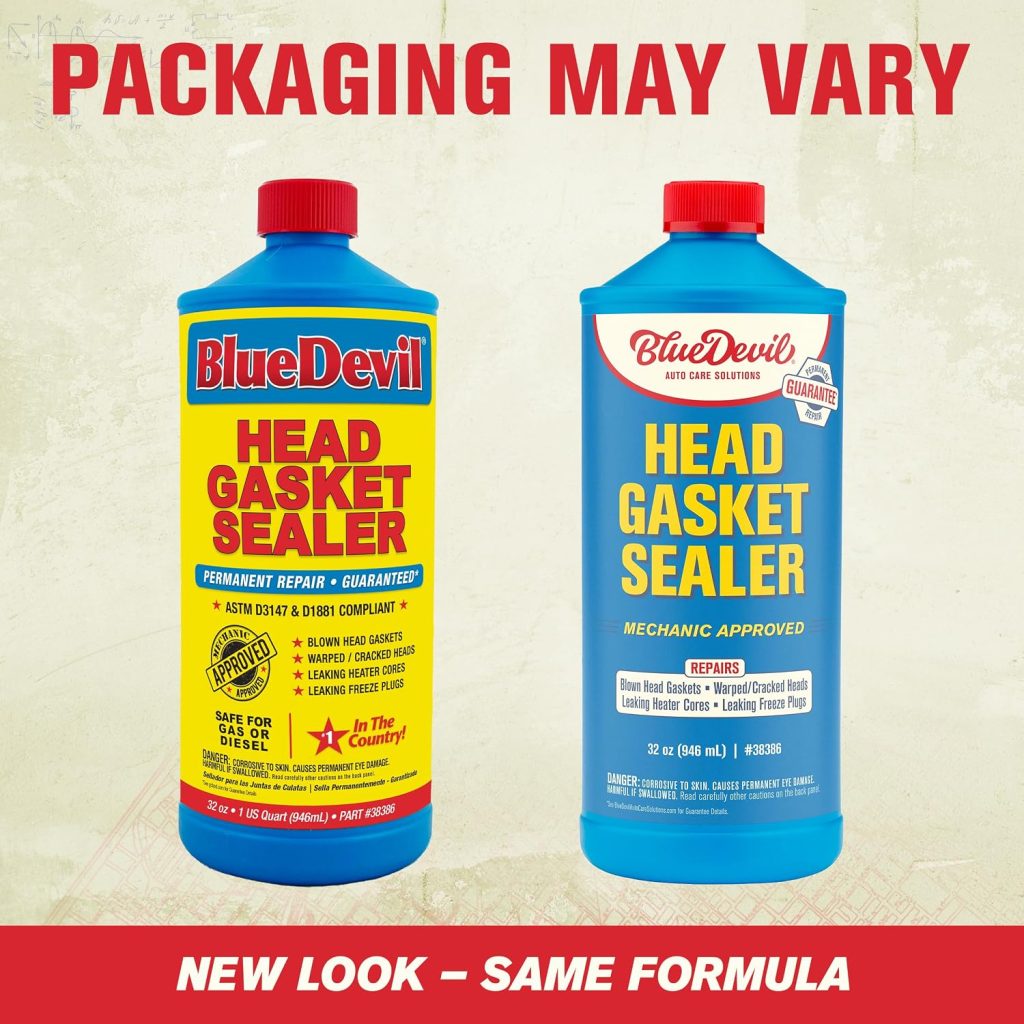
4. Bar’s Leaks HG-1 Head Seal - Best for Severe Heat Cycles
Bar's Leaks HG-1 is engineered specifically to tackle tough, stubborn head gasket cracks that experience significant metal movement.
- The Mechanism: HG-1 pairs liquid sodium silicate technology with advanced carbon-fiber reinforcement. As the liquid heat-activates near the leak site, the carbon fibers form a cross-hatched structural webbing across the fissure.
- Why It Works on Older Blocks: As engines heat up and cool down, metal cylinder heads expand and contract. Pure rigid bonds can sometimes crack under thermal stress. The added carbon fibers give HG-1 enhanced tensile strength to handle high thermal expansion cycles.
- The Trade-Off: The formula is relatively thick, meaning you must carefully follow the idling and thermal stabilization steps to ensure uniform distribution.
- Best Suited For: Older trucks, high-mileage engines, and cast-iron blocks mated to aluminum heads.
Diagnostic Check: Will a Chemical Sealer Actually Fix Your Car?
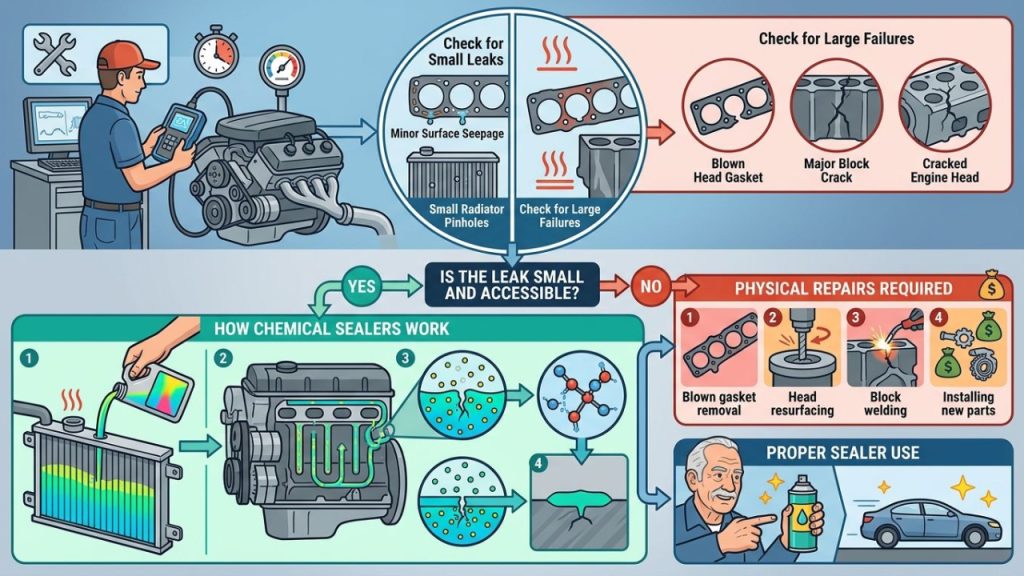
Here is the truth: Chemical sealers are not magic in a bottle. They cannot rebuild melted aluminum or replace broken steel. Performing a quick 5-minute diagnostic before buying a sealer will save you time and money.
When a Chemical Sealer WILL Work:
- Coolant-to-Cylinder Leaks (White Smoke): If your car emits sweet-smelling white steam from the tailpipe and consumes coolant slowly, a chemical sealer has an exceptionally high success rate.
- External Coolant Seeps: If you notice coolant weeping externally along the seam where the cylinder head bolts to the engine block, liquid sealers can plug the gap.
- Early-Stage Overheating: If your temperature gauge creeps up during highway driving due to minor pressure loss in the cooling system, chemical treatment can restore pressure integrity.
When a Chemical Sealer WILL NOT Work:
- "Milky Oil" Cross-Contamination: Pull your engine oil dipstick. If the oil looks like a light brown milkshake or thick chocolate mayonnaise, your oil and coolant passages have blown into each other. Chemical sealers cannot cure in an oil-saturated environment. Do not waste your money.
- Massive Compression Blow-By (The Geyser Test): Take off your radiator cap (when the engine is completely cold!) and start the engine. If coolant instantly erupts out of the filler neck like a volcano, the combustion leak is too wide. The sheer volume of exhaust gas escaping will blow the chemical fluid out before it ever gets a chance to heat-cure.
- Warped Cylinder Heads: If the engine was severely overheated to the point where the aluminum head warped out of flat spec, the mechanical gap is too wide for chemical bridging.
Step-by-Step Application Best Practices
If your vehicle passed the diagnostic check, applying the product properly is the difference between a 3-year fix and a clogged radiator.
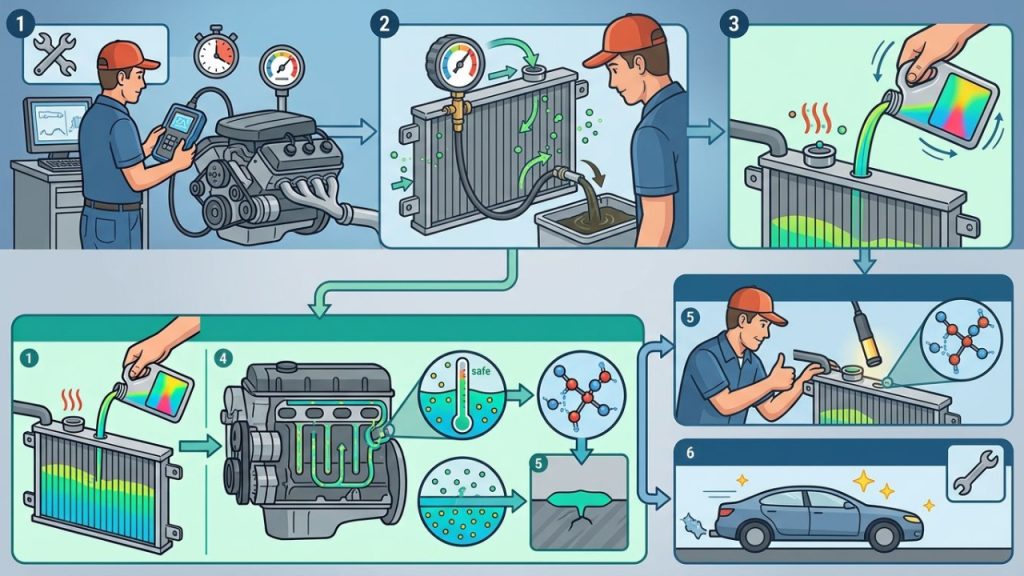
- System Cleanliness & Diagnostics: Prepare the metal surfaces for bonding.
Remove any old, degraded, or oil-contaminated coolant. Perform a basic cooling system water flush. Chemical sealers bond to clean metal-rust, scale, and oil sludge act as barriers that prevent proper adhesion.
- Thermostat Removal & Dosing: Ensure unrestricted circulation.
If using a high-potency silicate formula like BlueDevil, temporarily unbolt your thermostat housing and remove the thermostat. This prevents airlocks, keeps the cooling loop wide open, and ensures the sealer circulates continuously through the engine block during thermal curing.
- Thermal Curing Cycle: Activate the heat-bonding reaction.
Set your vehicle’s interior climate controls to Full Heat and high fan speed (this opens the heater core valve and helps manage engine temps). Pour the exact recommended bottle dosage into the radiator or overflow tank. Start the car cold and let it idle undisturbed for 30 to 50 minutes. The engine needs to reach full operating temperature so thermal heat can cure the compound directly inside the leak.
- Post-Cure Maintenance: Protect your engine long-term.
Turn off the engine and let it cool down completely (at least 2 to 3 hours). Reinstall your thermostat. Change your engine oil and filter to ensure no residual chemical wash-through remains in the crankcase. Top off the cooling system with fresh 50/50 antifreeze mix.
Conclusion
A blown head gasket is a serious mechanical issue, but it doesn't automatically mean your car belongs in a scrap yard. If you catch the leak early, before severe oil contamination occurs, using a top-tier chemical sealer like Steel Seal or BlueDevil can save you thousands of dollars and keep your vehicle on the road for years to come.
It depends heavily on the initial damage. On minor leaks where proper prep was completed, sodium silicate and ceramic treatments can form a permanent bond that lasts for the remaining life of the vehicle. On larger cracks or severely stressed blocks, a sealer typically acts as a temporary patch lasting anywhere from 6 to 12 months.
Only if applied incorrectly or added to a severely sludged cooling system. Pure liquid chemical sealers like Steel Seal contain zero solid particles, making physical blockages impossible. Particle-based sealers can clog small passages if the cooling system isn't flushed clean beforehand.
Both are liquid chemical sealers. The key difference is the application process. BlueDevil strictly requires a full water system flush and the temporary removal of the thermostat before use. Steel Seal features a simpler installation protocol that can often be added directly to clean, existing antifreeze.

Gerry is a certified automotive expert and founder of AutomotiveAH.com, specializing in vehicle maintenance, diagnostics, and engine systems, delivering trusted, research – driven automotive guidance.