

Brake booster check valve is a small one-way valve. It is made of plastic or metal. Size is like a small mushroom. It fits in the vacuum hose. The hose runs from engine intake manifold to brake booster. Brake booster is a big round can on the firewall. The valve has two ends with barbs. Barbs hold 3/8 inch or 1/2 inch hose. Some valves have a rubber grommet. Some screw in. All let air go one way only.
Job of the Valve
- Let vacuum from engine go into booster.
- Stop air from going back to engine.
- Keep vacuum inside booster.
- Help brake pedal feel easy to push.
- Give power assist to brakes.
How Vacuum Brake Booster Works
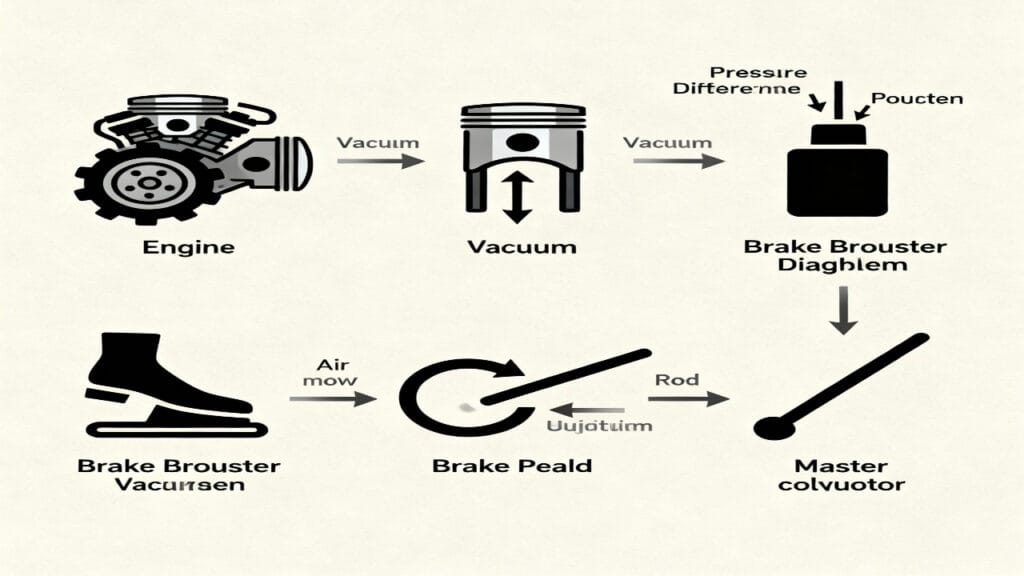
- Engine runs. Pistons make vacuum in intake manifold. Vacuum is 15 to 22 inches Hg.
- Vacuum goes through check valve to front side of booster diaphragm.
- Back side of diaphragm also has vacuum when pedal is up. No assist.
- Push pedal. Rod opens valve in booster. Air at 14.7 psi enters back side.
- Front side keeps vacuum. Big pressure difference pushes diaphragm.
- Diaphragm pushes rod into master cylinder. Multiplies foot force 3 to 4 times.
- Let go of pedal. Valve in booster closes. Check valve closes. Vacuum stays in front side.
- Engine off. 2 or 3 hard pushes still work.
Check valve is the only part that stops vacuum leak back to engine.
Parts Inside Check Valve
- Body: plastic or metal.
- Disc or flap: rubber or plastic.
- Spring: small metal spring holds disc closed.
- Arrow on body: shows flow direction to booster.
Bad Valve Signs
- Brake pedal hard like wood. Need big leg force.
- Brake pedal soft. Goes down too far.
- Hiss sound near booster when push pedal.
- Engine idle rough when push brake.
- Engine RPM up or down when brake.
- Brake light on dash if booster breaks.
- Car stops slow in fast stop.
Tools to Test
- Vacuum gauge 0 to 30 inHg.
- Hand vacuum pump.
- Pliers to pinch hose.
- Flashlight.
- Mirror on stick.
- Rags.
- Brake cleaner spray.
- New check valve.
Test 1: Look and Touch
- Find valve in hose from booster to manifold.
- Look for crack, break, oil on valve. Oil bad for rubber.
- Move valve side to side. Too much move = bad grommet.
- Feel hose. Hard or soft bad. Must be springy.
Test 2: Blow Air Test – Engine Off
- Pull valve out of both hoses. Twist or use pliers.
- Blow air in booster end. Air must come out manifold end easy.
- Blow air in manifold end. No air must come out. Feel block.
- Suck air from booster end. Must hold suction 10 seconds.
- Put valve in water cup. Blow or suck. Bubbles = leak bad.
Test 3: Engine Run Vacuum Test
- Put T fitting in booster hose. Connect gauge.
- Start engine. Gauge must show 15 to 22 inHg steady.
- Push brake hard 5 times. Gauge drop no more than 1 to 2 inHg each time. Must go back fast.
- Turn engine off. Gauge must stay over 5 inHg for 30 seconds. Fast drop = bad valve or bad booster.
Test 4: Hand Pump Test
- Take hose off manifold. Put cap on manifold port.
- Connect hand pump to booster side of valve.
- Pump to 20 inHg.
- Wait 1 minute. Drop more than 1 inHg = valve leak.
Any test fail = replace valve now.
Replace Valve Steps

- Engine cold.
- Pull old valve out.
- Look at arrow on new valve. Arrow to booster.
- Put silicone spray on barbs. No oil.
- Push new valve in hoses hard. Hear click or feel seat.
- Start engine. Push brake. No hiss. Pedal normal.
- Drive 50 miles. Check again.
Cost new valve $8 to $25. Buy OEM best. Cheap valve fail fast.
Wrong Things Not to Do
- Put valve arrow wrong way.
- Use old cracked hose.
- Forget new grommet if old one bad.
- Drive car with bad valve.
Math of Booster Force
Foot push 50 lb. Pedal lever make 150 lb. Booster add force from air pressure. Formula: F_total = F_leg + (P_air – P_vacuum) x Area_diaphragm P_air = 14.7 psi. P_vacuum = 0 psi when 30 inHg. Area 9 inch booster = 63 in². Area 11 inch = 95 in². 18 inHg difference = 9 psi. 9 psi x 63 in² = 567 lb extra force. Total force 150 + 567 = 717 lb. No vacuum = only 150 lb. Brakes weak.
When to Go to Mechanic
- Hiss from booster with valve out. Diaphragm bad.
- ABS light or traction light on with brake problem.
- No tools or no safe place to work.
- Brake fluid leak at master cylinder. Shop use smoke machine find small leak. New booster cost $150 to $400 plus work.
Keep System Good
- Check hose and valve every oil change 5000 miles.
- Change bad hose at 30000 miles.
- Change valve at 60000 miles even if good.
- Full test every year or before long trip.
- Clean air filter.
- Tight all intake bolts.
- Change brake fluid every 2 years.
- Adjust rear brakes right.
Vacuum Numbers to Know
- Good manifold vacuum idle: 17 to 22 inHg.
- Good hold engine off: over 5 inHg 30 seconds.
- Max booster help: 20 to 25 inHg.
- Low vacuum under 12 inHg: engine problem or high altitude.
Different Valve Types

- Inline valve: in hose.
- Grommet valve: in booster hole.
- Screw valve: thread in booster.
- Double valve: two in one for twin diaphragm booster. All work same. Arrow to booster.
Cars Without Check Valve
- Hydroboost: use power steering pump pressure. No vacuum.
- Electric brake booster: new electric cars. No valve.
- Old cars no booster: manual brakes only.
Engine Effect from Bad Valve
- Big vacuum leak.
- Engine run lean.
- High idle RPM.
- Check engine light code P0171 or P0507.
- Stall at stop light possible.
Hose Sizes
- 3/8 inch ID most cars.
- 1/2 inch ID big trucks.
- 5/16 inch some small cars. Measure old hose before buy new.
Material
- Plastic valve: light, cheap, break if hit.
- Metal valve: heavy, last long, cost more.
- Rubber disc inside: hard with age or oil.
- Spring inside: rust if water in hose.
Storage of Vacuum
- One big booster hold 2 to 3 hard stops after engine off.
- Small booster hold 1 to 2 stops.
- Test: engine off, push pedal hard. Count firm pushes before hard pedal.
Altitude Effect
- Sea level: 20 inHg easy.
- 5000 feet: 15 inHg max.
- 10000 feet: 10 inHg max. Less vacuum = less assist. Pedal feel harder at high place.
Conclusion
A brake booster check valve is a small but vital part of the brake system. It keeps vacuum sealed in the booster, stopping air from leaking back to the engine. This makes the brake pedal easier to press and ensures strong, consistent brake power. Regular testing and timely replacement prevent hard pedals, poor braking, and unsafe driving conditions.
Gerry is a certified automotive expert and founder of AutomotiveAH.com, specializing in vehicle maintenance, diagnostics, and engine systems, delivering trusted, research – driven automotive guidance.